MODULE 10
Impacted Canines
- canine that is prevented from erupting into its normal position, delay in 6mo after contralateral tooth has erupted
- prevalence
- maxillary canine 1-3% impacted
- 1.5% have palatally impacted maxilalry canine
- F>M 3:1
- 80% palatal, 20% buccal
- unilateral > bilateral
- increased prevalence class II div 2
- 40% have anomalous lateral incisor
- strong inheritance factor
- aetiology
- lateral guidance theory, distal surface of its eruption and agenesis of lateral incisors
- autosomal dominant with incomplete penetrance
- buccally impacted canines are more commonly associated with crowding
- diagnosis
- maxillary permanent canines erupt around 11-12
- mandibular permanent canines erupt 9-11
- asymmetry on palpation, delay in lateral or canine eruption
- flaring/tipping/migration of laterals
- loss of vitality / increased mobility of upper 2s or 1s
- should be able to palpate the maxillary canines by the age of 10, if you cant must refer for OPG
- OPG or PA
- PALATAL IMPACTION = LARGER ON OPG
- BUCCAL IMPACTION = SMALLER ON OPG
- early management
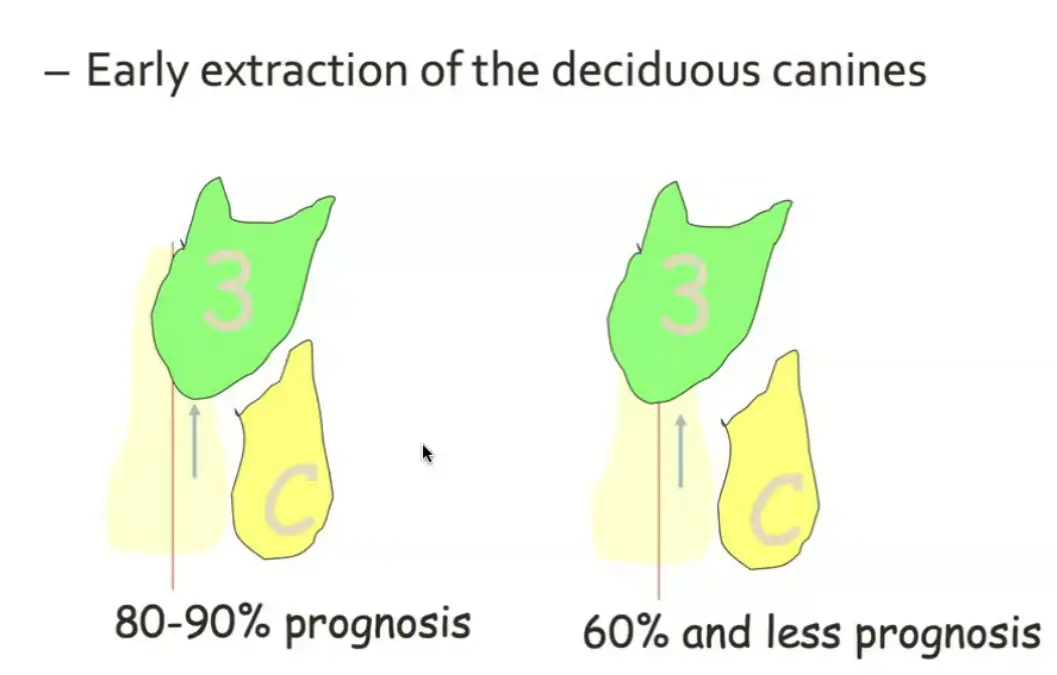
- exo the primary canine
- avoiding impaction is best to avoid surgical
- expansion or headgear
- classification
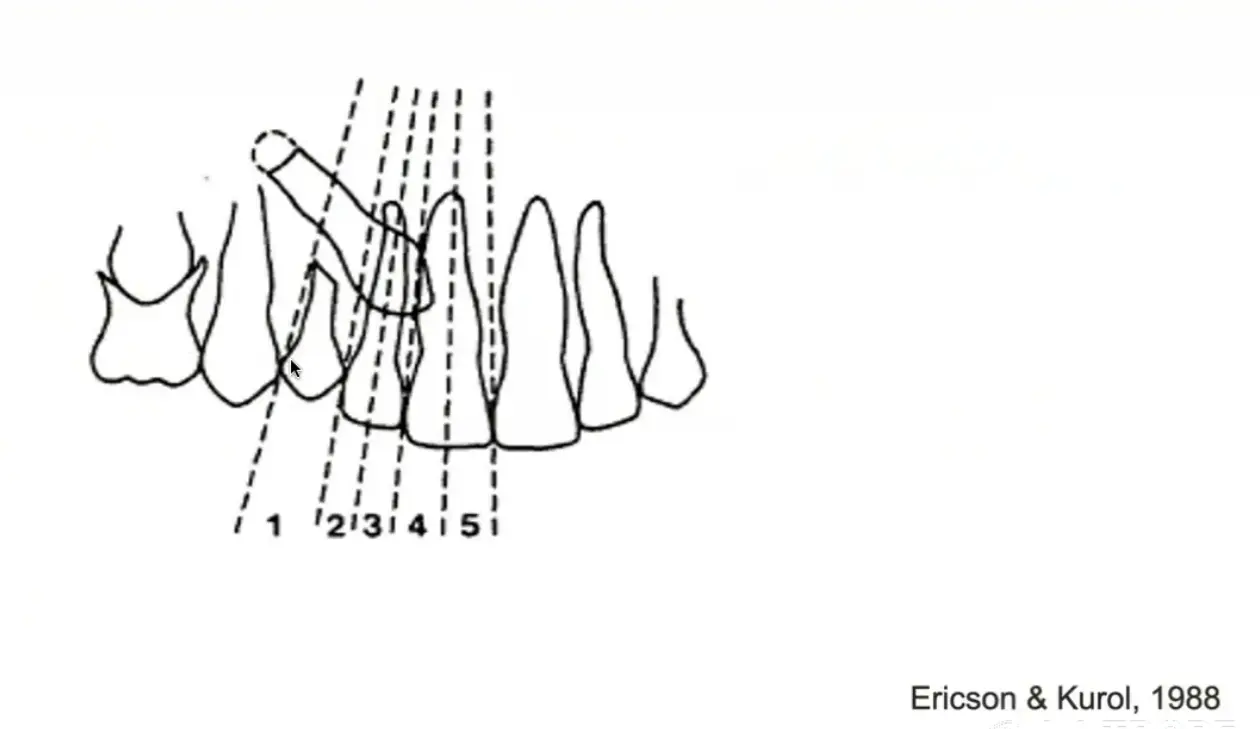
difficulty
- position relative to distance from occlusal plane - midline
- distance from lateral and central incisor - sectors
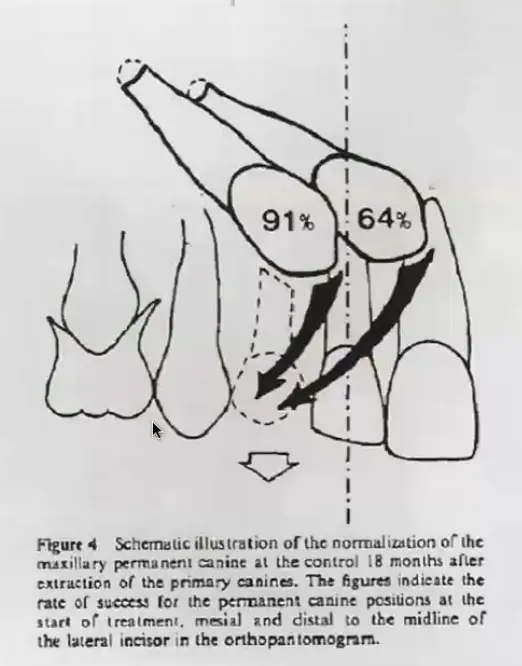
- early treatment
-
30 degrees less chance of deciduous canine removal will improve impaction
- <1/2 root of lateral incisors gives 87% chance of improvement if deciduous exo
-
- average tx time
- uni 24mo
- bilateral 30mo
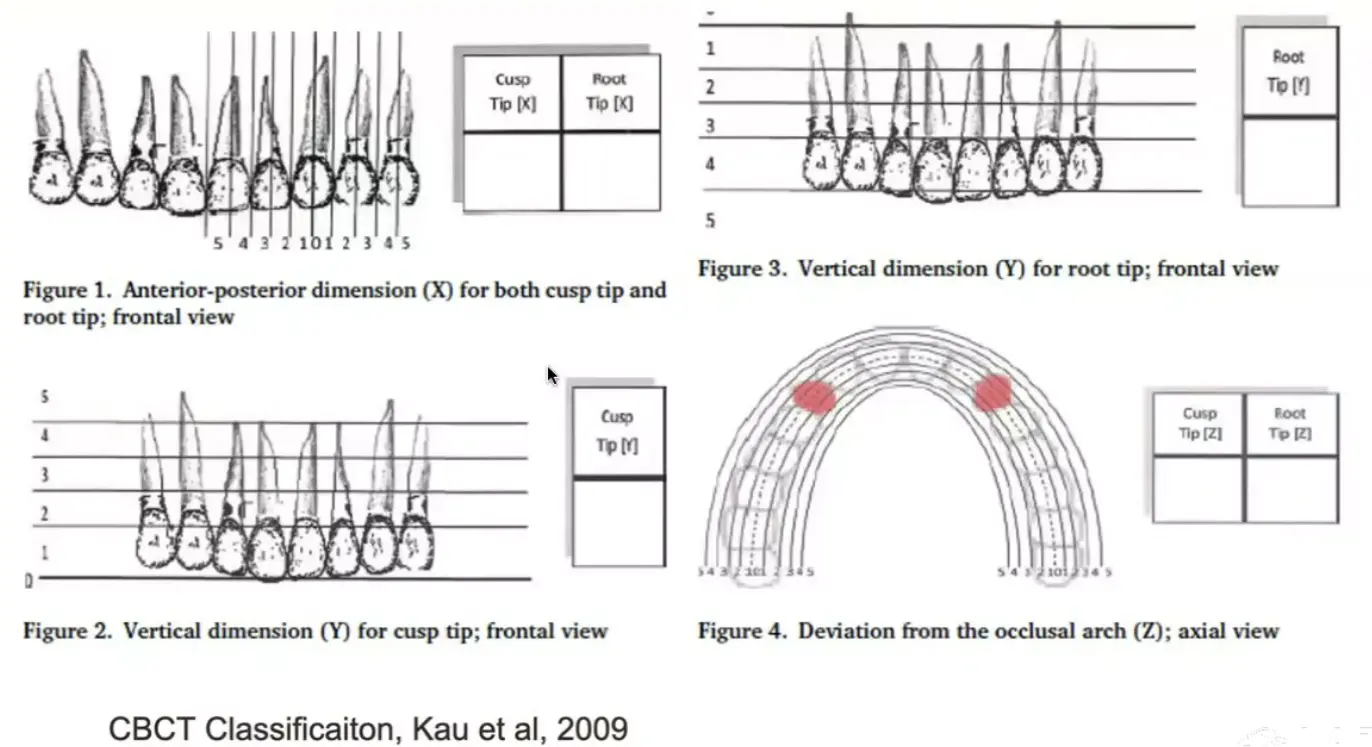
- with surgical exposure, difficulty increases if
- closer to midline
- greater distance from occlusal plane
- greater the angle
Complications
- periodontal problems
- especially on lateral,
- root resorption
- central, lateral, 1st premolar
- ankylosis
- loss of tooth
- lateral, canine, central
- pathology
- cyst formation
Treatment for impacted canines
Exo of deciduous canine
- if low impaction severity, but potential to erupt into arch with guidance
Surgical exposure and bracketing
- severe impaction without eruption on its own
- expose impacted tooth, bracket attachment then use chains to pull into position
- consideration factors:
- position and severity of impaction
- health of adjacent teeth
Open vs closed exposure
- open
- really close to occlusal plane or
- palatal surface (greater keratin in that mucosa)
- closed exposure
- buccal (doesn't have keratin)
- very high
- if open exposure in contraindicated area, will result in great amount of recession
Methods of traction
- URA
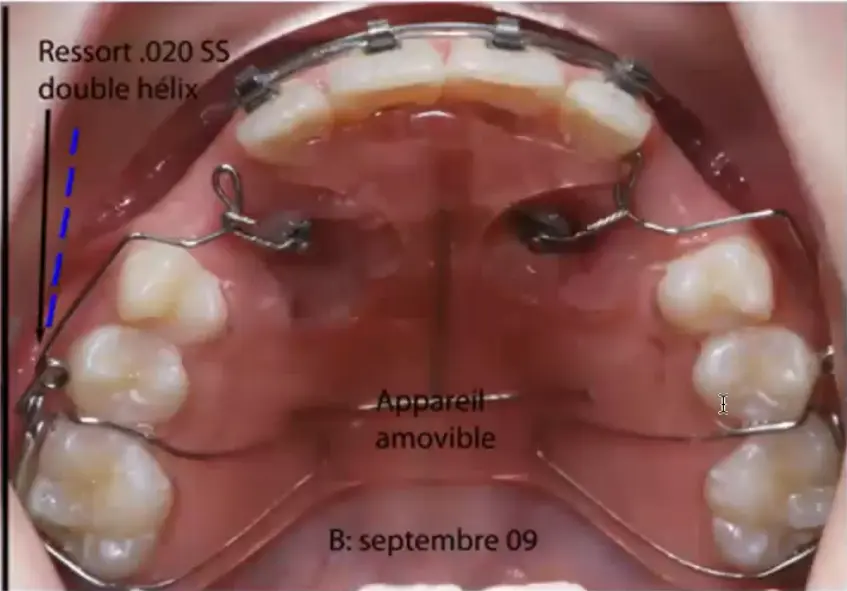
- removable appliance not very good as very finicky and challenging
- piggyback
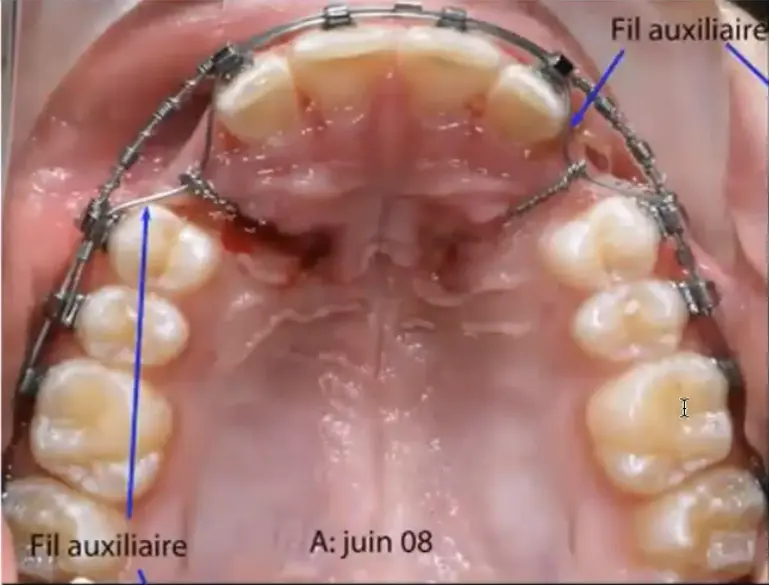
- solid arch wire for other teeth, flexible wire piggybacking to move the canine
- elastic thread
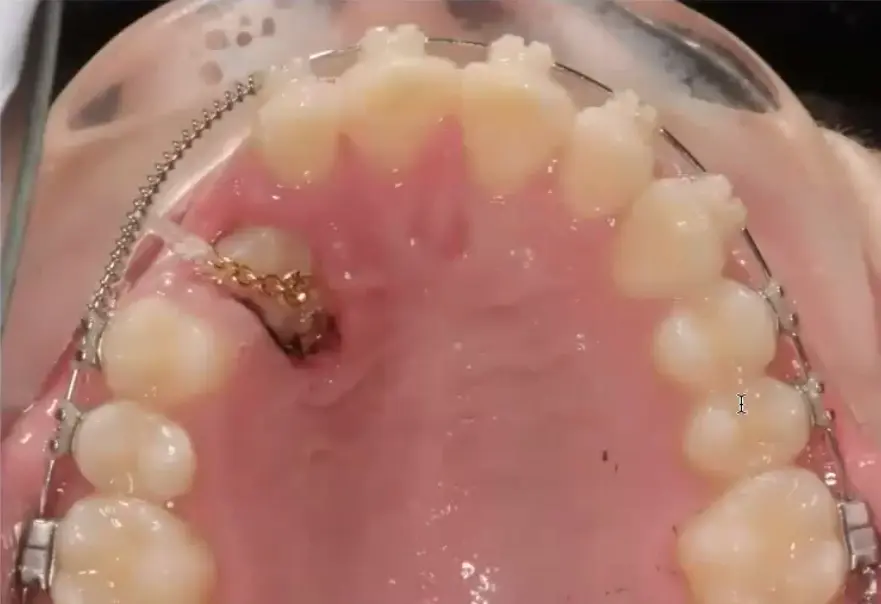
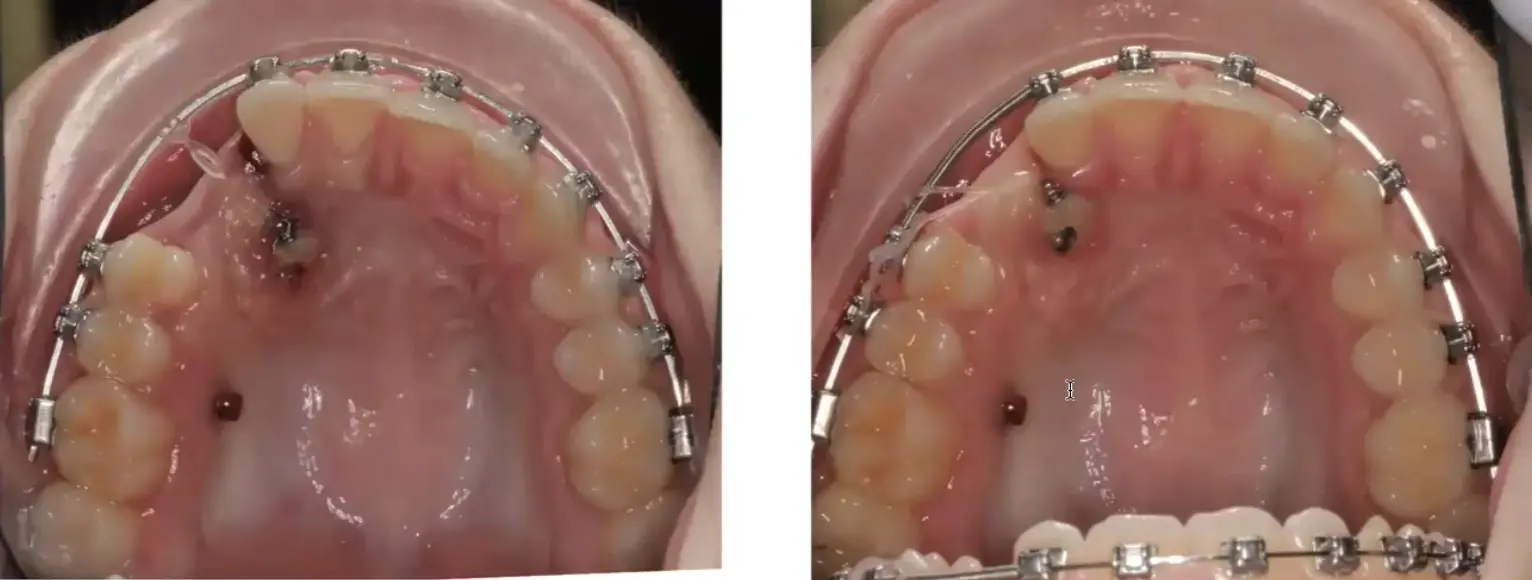
- best for more impacted teeth, or for rotation
- TPA + auxilliary arm (transpalatal appliance)
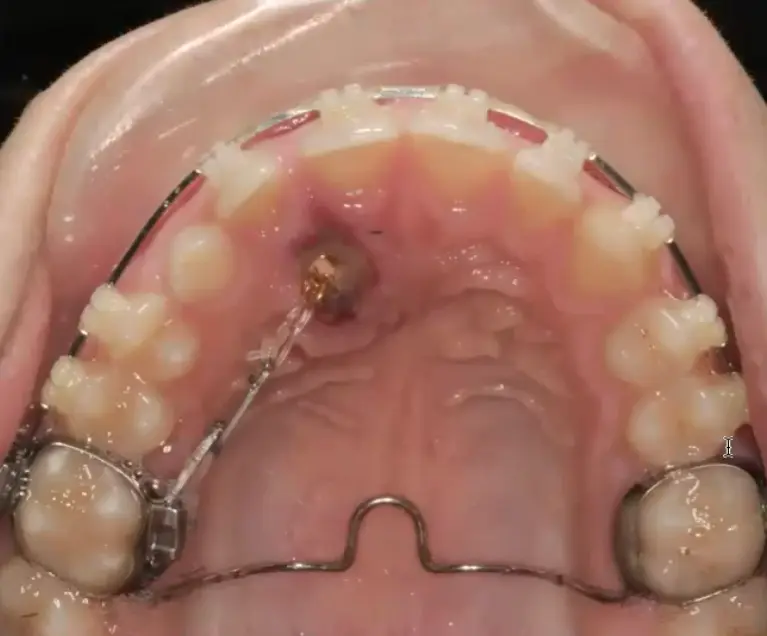
- for more distalisation cases
- ballista spring
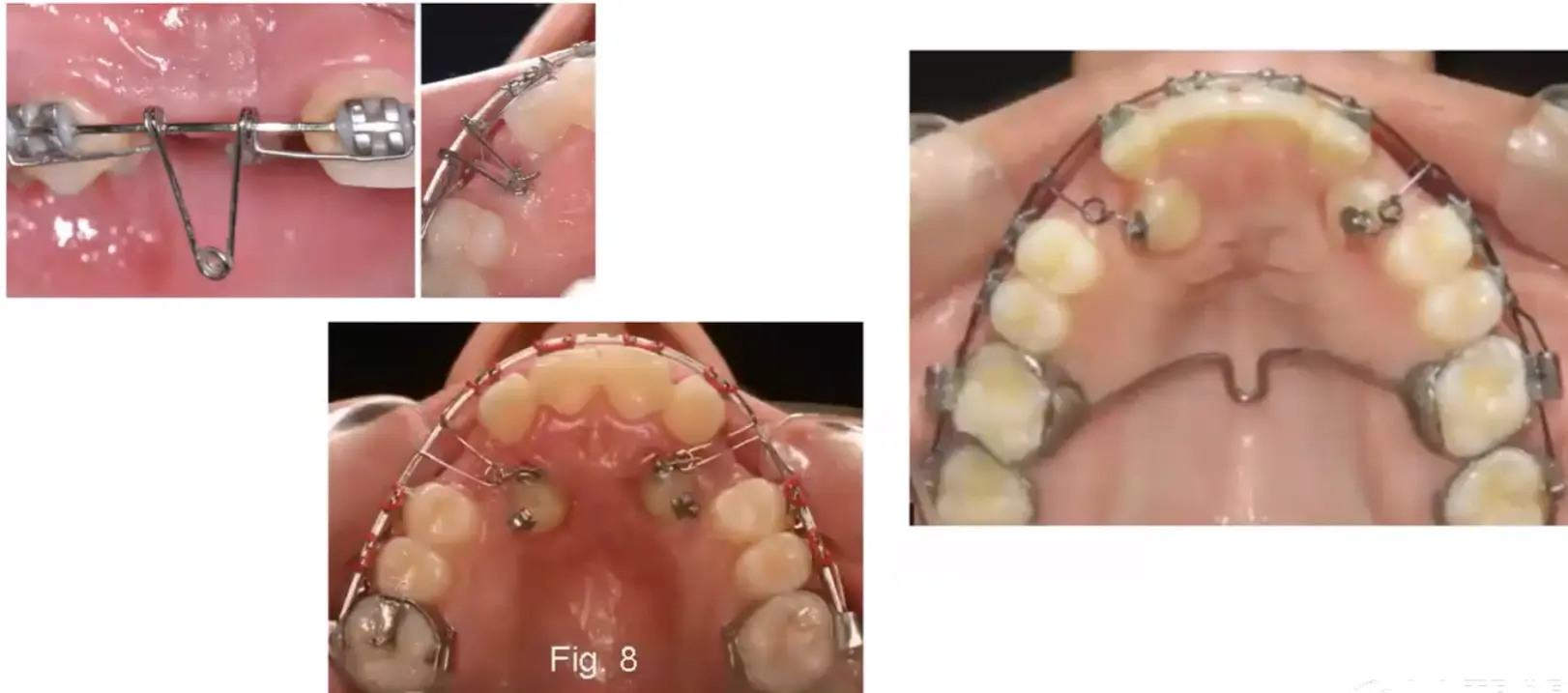
- spring under force
- TAD traction
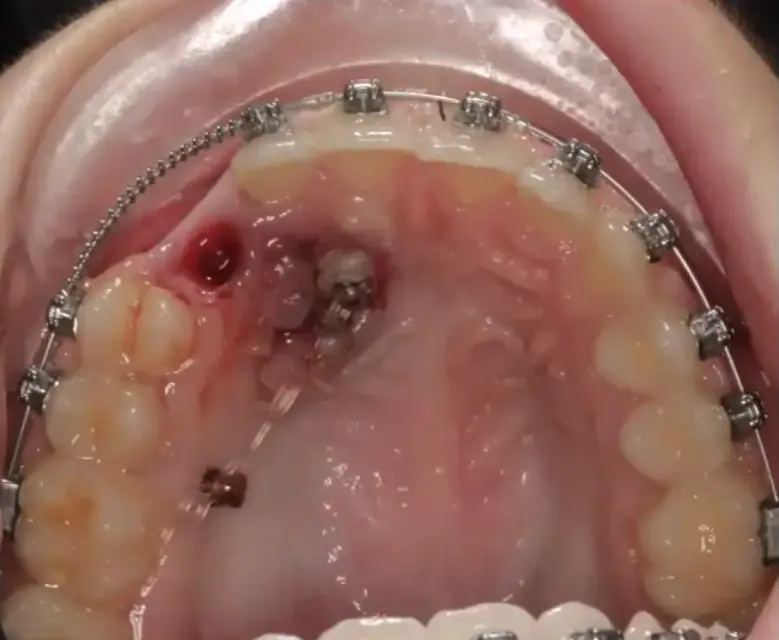
Woven canine
- palatal to upper CI and buccal to upper LI
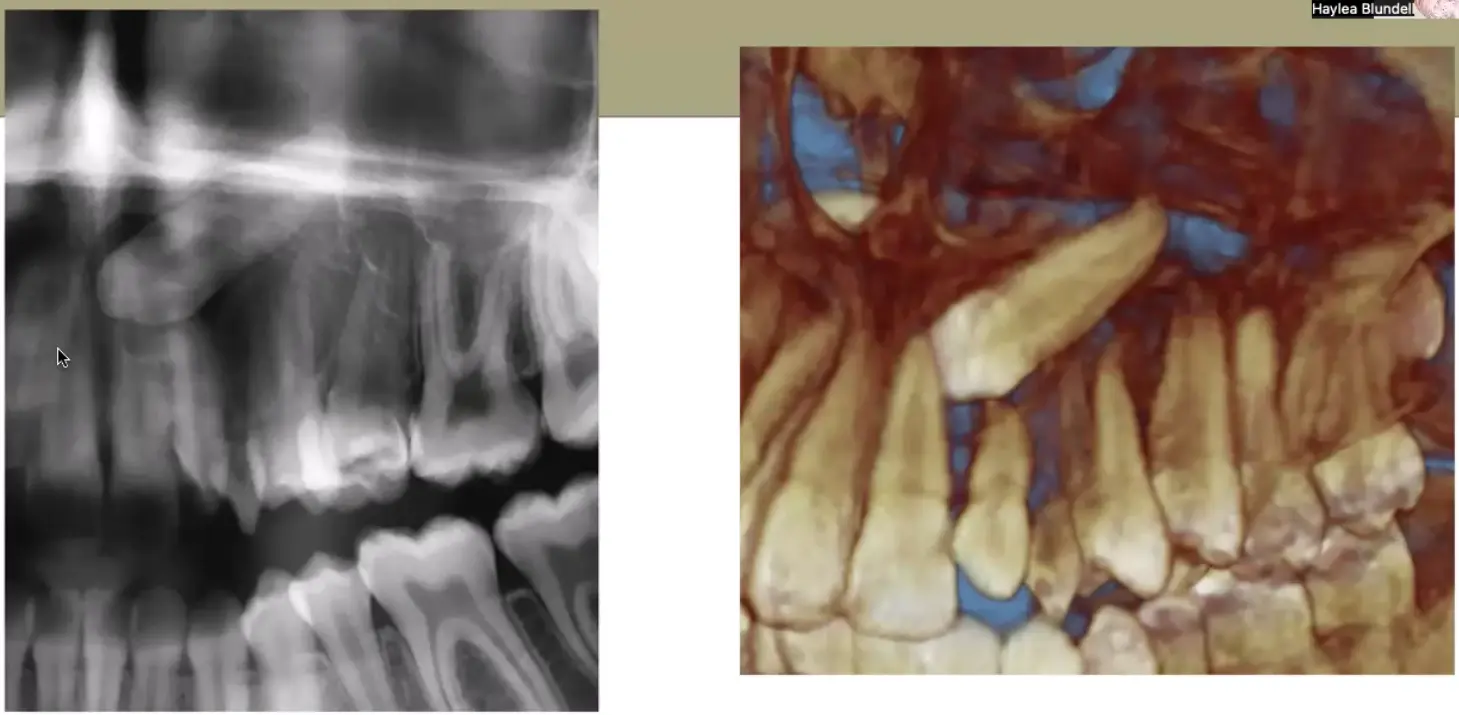
- TPA + auxilliary arm
Undesirable side effects
- root resorption
- aesthetics
- pain
- other
- 21% chance of pulp canal obliteration of paltal impacted canine
- vertical relapse
- differential torque between contralateral maxillary canine
- gingival recession
- ankylosis
- post op infection