Endodontic Case Selection and Treatment Planning
Treatment planning
- sequence of case selection and treatment planning carried out based on
- clinical factors
- dentists knowledge of abilities, limitations, armamentarium
Failure usually from
- misdiagnosis
- errors in treatment planning
- poor case assessment
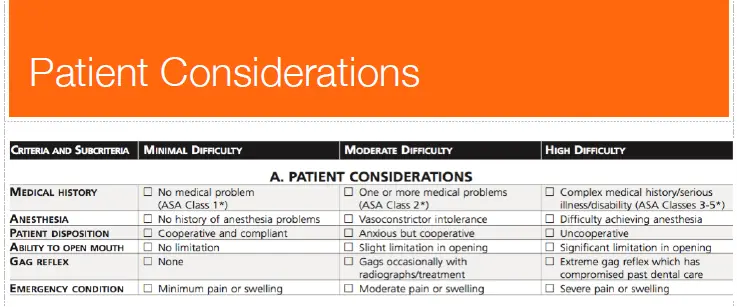
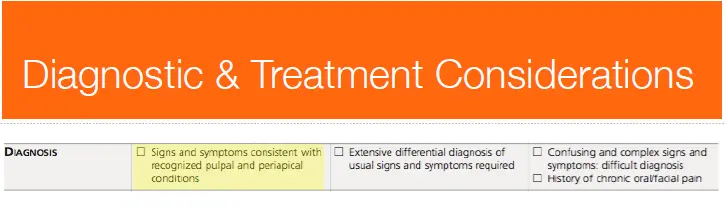
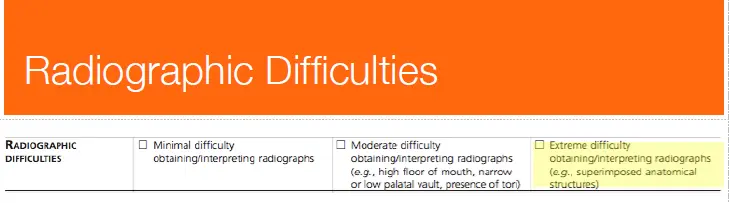
AAE Endodontic case difficulty assessment form and guidelines
Levels of difficulty
- minimal
- routine complexity/uncomplicated
- only factors in minimal difficulty category
- predictable outcome for limited experience practitioner
- moderate
- preop complicated
- one or more patient/treatment factors in moderate difficulty category
- predictable outcome challenging for experienced practitioner
- high
- preop exceptionally complicated
- several factors in moderate difficulty or one in high difficulty
- predictable treatment outcome challenging for most experienced practitioner with history of favourable outcomes
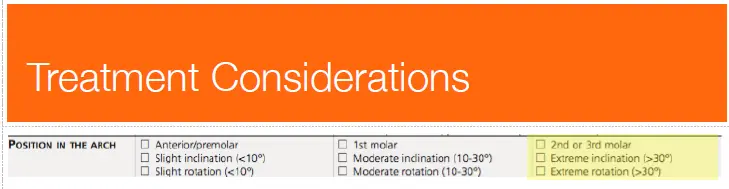







Maxillary molars
- MB2 93% of first molars, 60% second molars
- Stropko et al 1999
Always referral if necessary
- endo and GP same team
- best to know an endo before referral is done
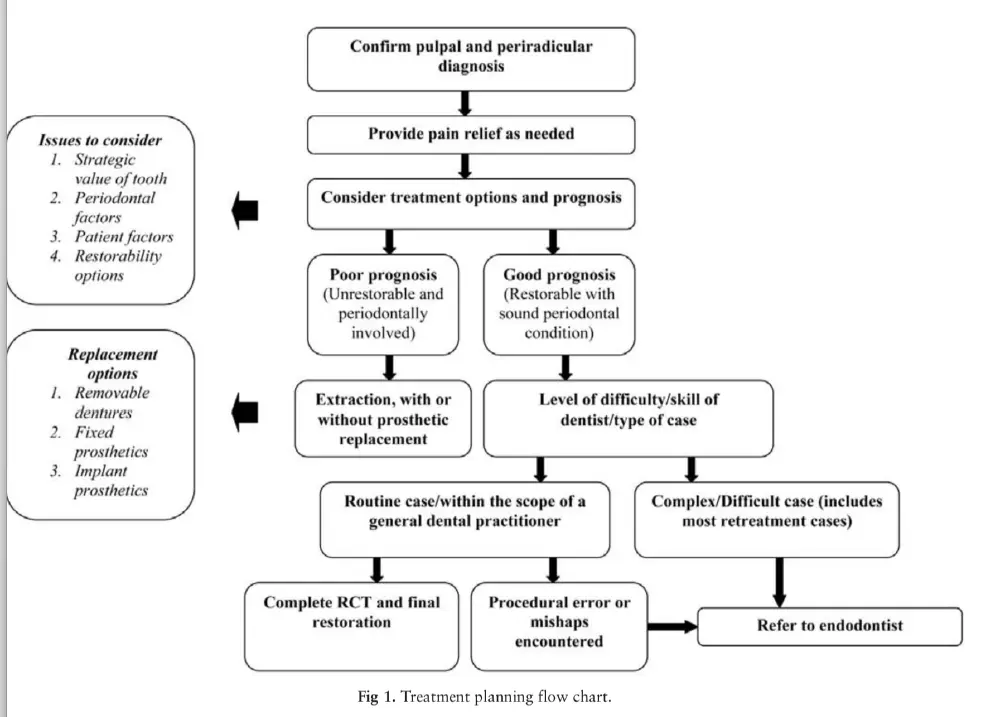
Treatment planning
first questions
- is tooth suitable for endo treatment
- is referral indicated
- how will tooth be restored
RCT or Exo
- prognosis
- restorative, periodontal, endodontic
- strategic value
- contribution to occlusal function
- patient factors
- medical conditions, physical impairment, oral health
- RCT contraindication
- unrestorable crown, severe perio
Restorative assessment
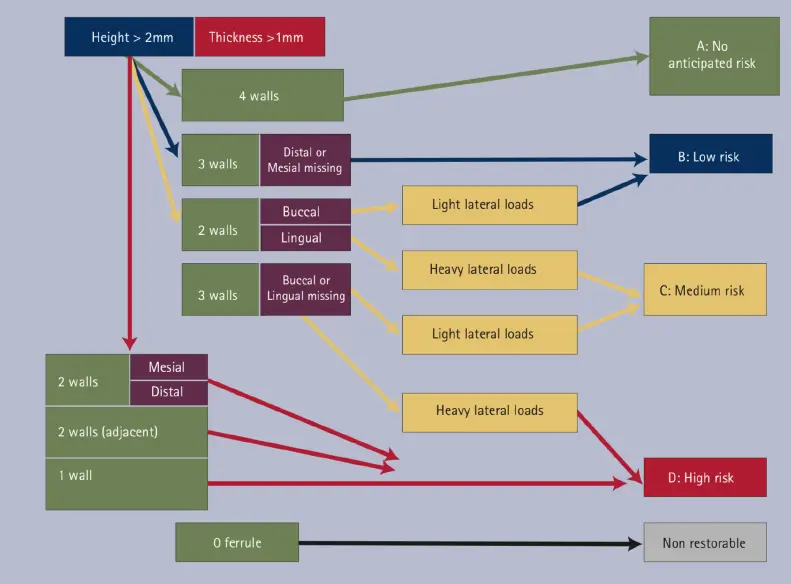
- entire coronal restoration removed (ideally)
- eliminate pathways of bacterial ingress
- detect and assess cracks
- assess restorative prognosis and plan future coronal restoration, e.g. post or no post
Periodontal assessment
- prognosis for teeth with both endo an perio will depend primarily on ability to control perio disease progression
- seek advice from periodontist prior to finalising treatment plan
Teeth without apical periodontitis
- treatment direct at prevention of AP
- maintenance of asepsis
- 90-100% success rate regardless of technical standard
- success = no symptoms or clinical signs
Teeth with apical periodontitis
- treatment directed at antisepsis
- elimination of intracanal infection
- prognosis depends on abiltiy to achieve microbial control
- technical standard of treatment is critically important
- healing rate following RCT 80-85%
- (Sjogren 1990, Friedman 2002, deChevigny 2008)
- Dependent on technical standard of Tx:
- High technical standard: 94% healing rate
- Inadequate standard (short/long): 68-76%
- Calcified canals: 60-70%
- Procedural problems: variable
(Akerblom 1988, Sjogren 1990, Spili et al 2005)
Strategic value
- in relation to overall function of dentition
- 2nd and 3rd molar less strategic value unless supporting prosthesis
Patient factors
- values, time, cost
- medication conditions not contraindication, but may complicate
- anxiety, gagging, rubber dam tolerance
- mouth opening, ability to lay supine
- consider overal health of dentition
- caries risk, perio stability