Endodontic microbiology and infections
#D3/S2/W1
#Endo
Kakehashi et al 1965
Potential routes of infection
- direct exposure (caries, truama, defective restorations, possible dentinal defects)
- fractures (non traumatic like bruxism)
- infection from the gingival sulcus
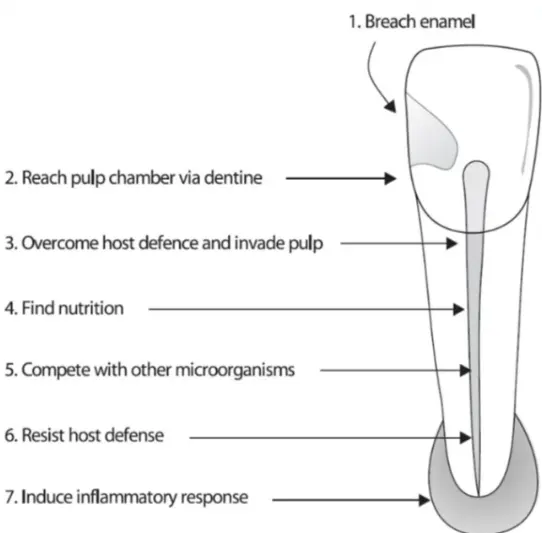
- type of Apical Periodontitis depends on the types of host response rather than the type of bacteria
- Apical Periodontitis has a polymicrobial aetiology
- Because it is an infectious disease, rationale for endo treatment is to eradicate occurring infection and/or prevent microorganisms from infecting and re-infecting the root canal or periradicular tissues
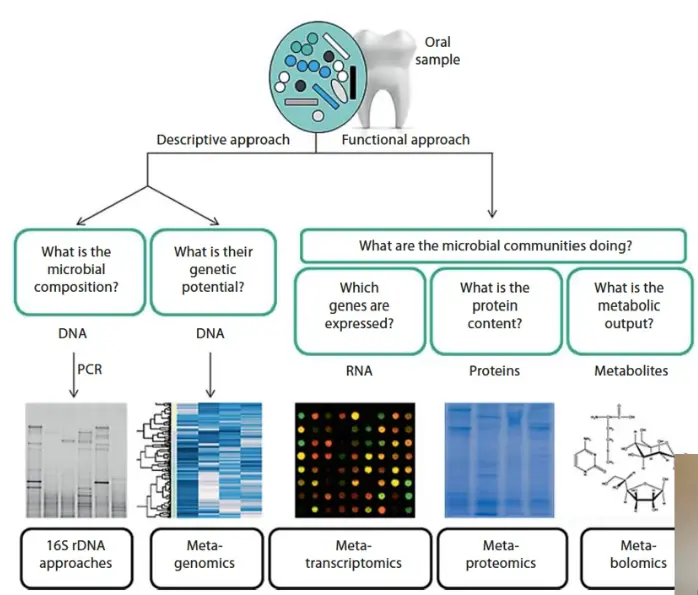
Microbiology diagnostic methods
- microbial root sampling limitations
- ineffective surface sterilisation
- inability to sample entire root canal system
- inaccessibility of biofilm for sampling (cant penetrate with a paper point easily)
Culture
- sample is inoculated in medium using microscopy or immunological methods
- broad range and shows viable bacteria
- limitations
- costly, time consuming
- low sensitivity (misses a lot of bacteria)
- requires experienced microbiologist
- dependent on transport mode
- some bacteria cannot be cultivated and others are hard to identify once they are (up to 70% of oral bacteria species are yet to be cultivated)
Molecular methods
- method varies depending on goal (specific detection vs identification of all or dominant species or profiling community structure )
- relies on target genes unique to species
- PCR is cornerstone of molecular techniques
- further analysis methods include
- denaturing gradient gel electrophoresis
- terminal restriction fragment length polymerisation
- DNA-DNA hybridisation
- limitations
- PCR cannot distinguish between DNA from living of dead cells (no information on viability)
- PCR cannot distinguish between DNA from living of dead cells (no information on viability)
Colonisation of the root canal system
Bacterial invasion of dentine
- species specific (size, adhesion characteristics, motility etc)
- regional variability (of dentine)
- interaction with other bacteria and host factors
- potential mode of entry in non-vital intact teeth but unclear clinical relevance in post-treatment endodontic disease
- some bacteria leave in dentinal canals, but current thought is not enough to cause re-infection
- penetration mostly streptococci and enterococci
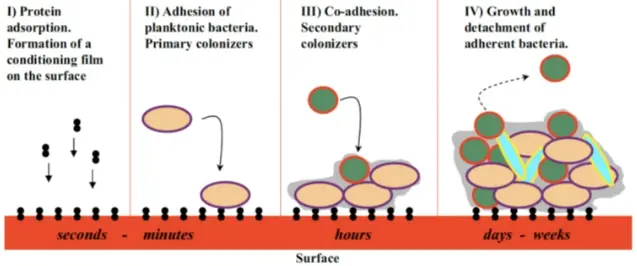
Biofilms
- planktonic bacteria does not push the disease process, biofilm does
- ENDO is biofilm mediated disease process
- sessile multi-cellular microbial community characterised by cells that are firmly attached to a surface and enmeshed in a self-produced matrix of extracellular polymeric substances (EPS)
- only 10% of weight by bacteria, rest is EPS
- "alive" in its own right, greater than just the bacteria it holds
- EPS (Flemming and Wingender 2010)
- medicates adhesion (biologic glue)
- provides mechanical stability
- allows accumulation of extracellular enzymes
- keeps cells in close proximity
- can serve as a nutrient source
- retains water (nutrient and waste channels)
- provides protective role against host defences and antimicrobial agents
- Advantages
- broader habitat range
- increases metabolic diversity (food web and enzymatic cooperation of degrade complex nutrients)
- protection
- facilitates cell-cell communicaiton
- facilitates genetic exchange
- enhances pathogenicity through synergism
- in Apical periodonitits
- colonise main canal, apical ramifications, lateral canals, isthmuses and external surface of apex
- formation
- pulp exposed to caries biofilm and planktonic bacteria floating in saliva
Microbial pathogenicity and virulence
- secreted products (enzymes, exotoxins, metabolic end products)
- Structural components (peptidoglycans, lipoteichoic acid, fimbrae, flagella, outer membrane proteins, DNA, exopolysaccarides )
- in Apical Periodontitis, host response evoked by
- bacteria invade periapical tissue via motility or growth and/or products/structural components penetrating
- requires integrated and orchestrated interaction of selected members of a mixed endodontic microbiota (not a single species)
- virulence factors
- summation of cellular components, antigens, secreted substances that accumulate in biofilm
- coincidental or consequential of actual functions
- depends on
- population density
- species composition
- bacterial interactions
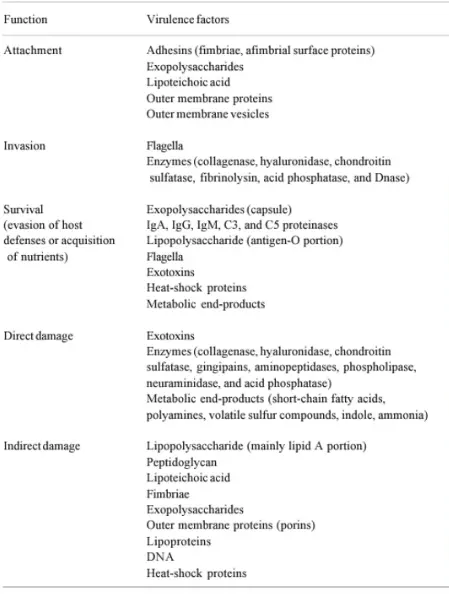
- LPS (lipopolysaccharide)
- found on outer membrane (gram negative), activates macrophages/monocytes (consequent release of inflammatory mediators)
- peptidoglycan
- found in cell walls, similar effect to LPS
- lipoteichoic acid (LTA)
- found in cell wall (gram positive), similar effect to LPS
- Fimbriae
- mediates adhesion, eleicit cytokine release from macrophage
- flagella
- confer motility to invade and evade
- exopolysaccharides
- form hydrated, water soluble gels - mediate adhesion and act as metabolic substrate, hinder phagocytosis and complement activation/mediated killing
- Bacterial DNA
- differs from mammalian dna
- enzymes
- proteinases degrade connective tissue, activate metalloproteinases, inactivate immune proteins
- hyaluronidase hydrolyse hyaluronic acid (component of connective tissue)
- sulfatases and phosphatases break down extracellular matrix
- DNAses reduces viscosity of debris from dead host cells to allow spread
- exotoxins
- excreted antigenic and toxic polypeptides, can bind and kill immune cells
- metabolic end products
- such as sulphur compounds, short chain fatty acids, polyamines
Bacterial communities in apical periodontitis
- primary intra-radicular infections
- 10-30 species
- gram positive and negative
- initially equal proportions of facultative and strict anaerobes
- eventual shift to obligate anaerobes as nutrients depleted
- culture studies: obligate anaerobes (fusobacterium ,prevotella and peptrostreptococci spp) and facultative anaerobes (streptococci spp)
- molecular studies: prevtolla, porphemonas, fusobacterium, streptococci, treponema spp, dialister spp, pseudoramibacter, propionibecterium spp, pravimonas, tannerella, filifactor, eubacterium spp, olsenella
- secondary intra-radicular infection
- bacteria not present initially that have gained entry during or after root canal treatment procedure OR persistent infection perpetuated but bacteria that have resisted killing and are able to survive in harsher, nutrient limited environment
- culture studies: E Facalis, streptococci sp, lactobacilli sp, peptostreptococci , fusobacterium and prevotella sp and fungi
- molecular studies: E faecalis, propinobacterium sp, fusobacterium, streptococci sp
- E. Faecalis
- penetrates tubules
- can survive low nutrient environment (starvation state)
- withstands high pH up to 11.5 (CaOH goes up to 10)
- don't know yet if it just lives in the canal after or it pushes the disease process (commensal organism more likely)
- True extra-radicular infections
- acinomyces sp and propinobacterium sp eaither as biofilm adhered to external root surface or cohesive actinomycotic colonies within inflammatory lesion
- Bacterial survival
- abiltiy to withstand biomechanical cleaning and intra canal medication
- penetration into inaccessible areas (isthmus, lateral canal, tubules)
- ability to survive in inhospitable environments
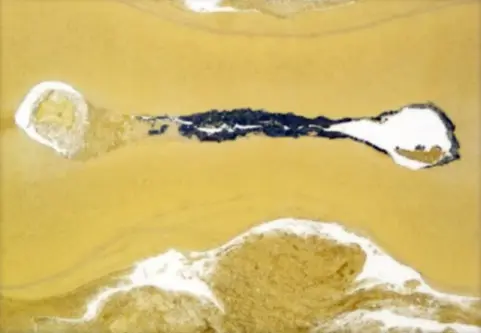
- selective factors of the root canal system
- nutrient availability
- oxygen tension
- redox potential
- environmental pH
- other bacterial species present
Main bacteria and their virulence factors
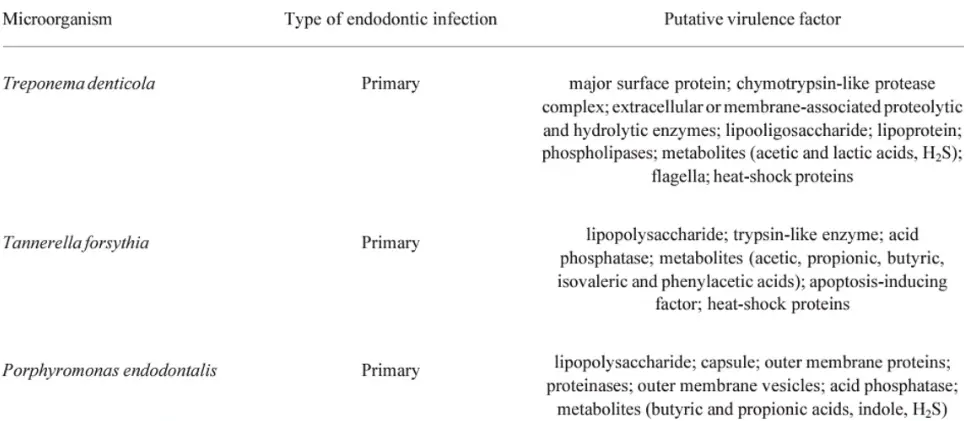
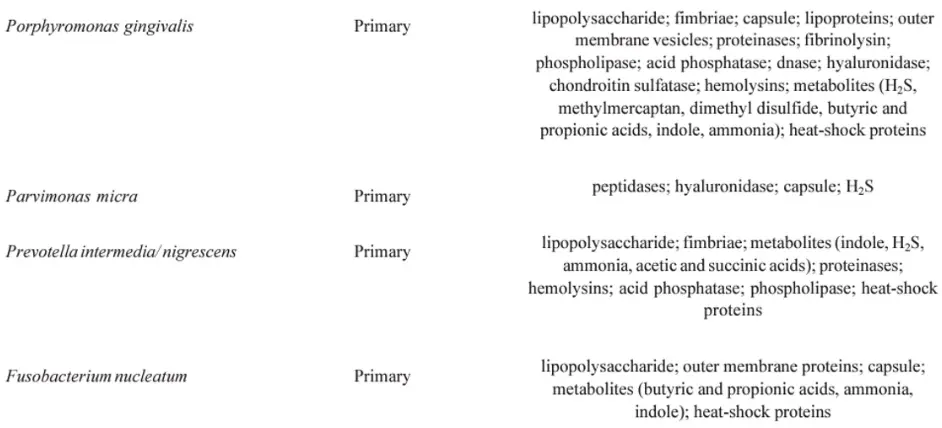
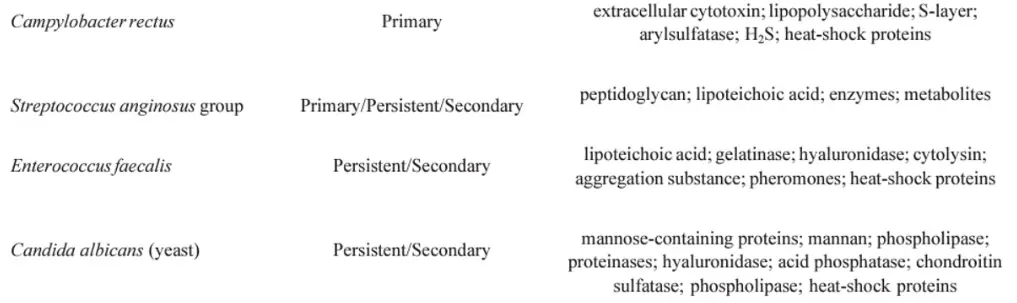
Role of systemic antibiotics
- not indicated in routine endo treatment, instead
- remove source of infection
- drain localised fluctuant swellings
- however, may be indicated when
- cellulitis
- regional lymphadenopathy
- patients with compromised immune system
- when access and/or drainage is not possible (inaccessible canals and no fluctuance)