Access for Root Canal Treatment
#D3/S2/W1
#Endo
AIm of access cavity
- provide access to root canal system
issues that result from good access
- root perforation
- ledge formation
- instrument breakage
- inadequate cleaning of root canal system
- incorrect shape of completed canal preparation
Issue with access
- most common
- making it too small
- most critical
- wrong place -> may lead to perforation
Steps of access
- case assessment
- tooth iso
- change gloves
- open RCT kit
- initial prep
- place interim restoration
- re-access tooth
Pre-operative assessment
- preop radiogrpah PA or CBCT
- consider
- size of chamber
- angulation
- long axis of tooth and roots
- anatomical landmarks
- roof of pulpchamber at gingival margin
- floor of chamber at alveolar crest
- remove caries, defective restoration and assess fracture prior to access cavity prep
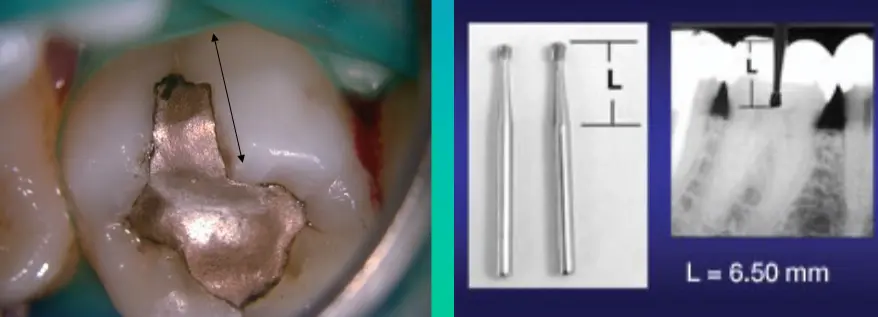
Isolation
- best to isolate multiple teeth for better orientation
- use caulking agent to seal dental dam (poli-grip)
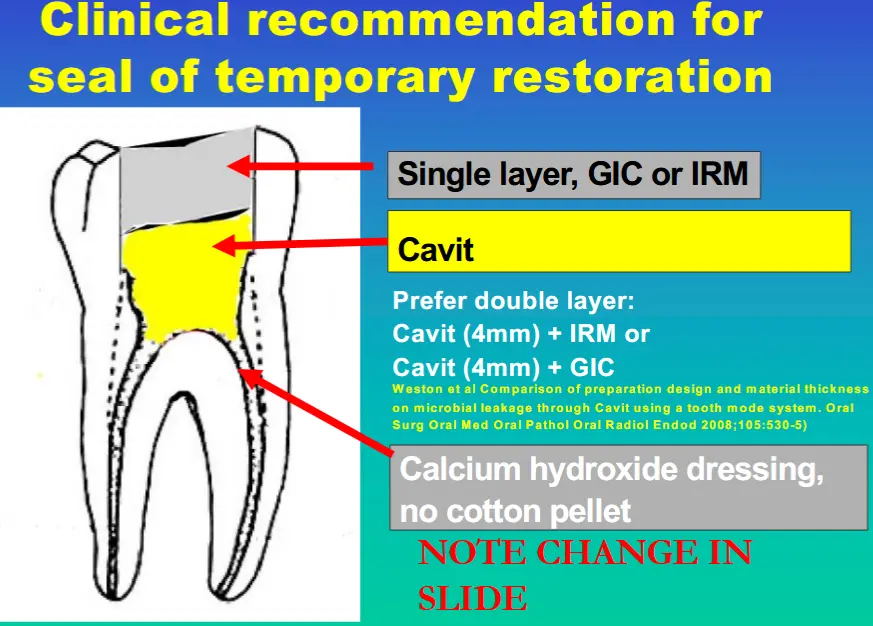
Interim restoration
function of provisional restoration
- prevent contamination either from lateral or occlusal areas
- provide structural support to the tooth to prevent fracture
temporary restoration
- create seal for canals in access cavity and usually made in an interim restoration
- seal medication between visits
Interim
- GIC generally not used for marginal ridge, does not have good shear strength
- use SS band if marginal ridge is missing
- SS band is difficult to place when opposite marginal ridge is intact, use composite resin with appropriate cusp overlay
Re access
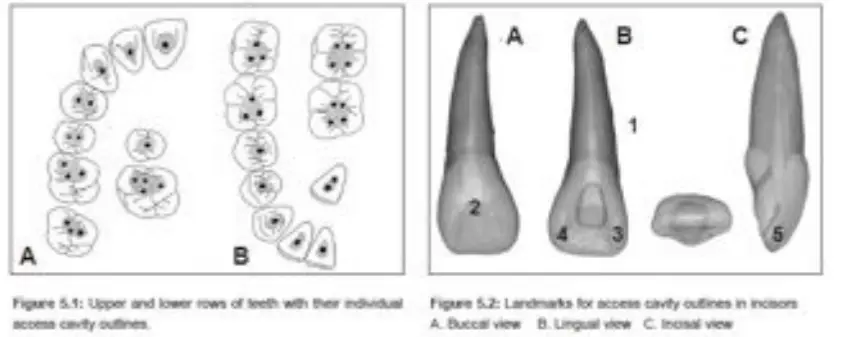
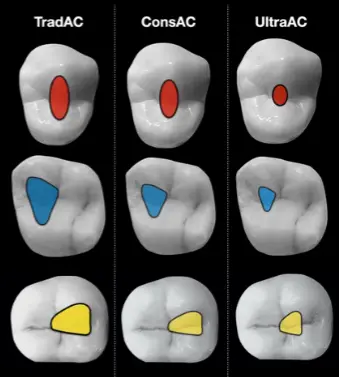
access cavity outline form
- how large?
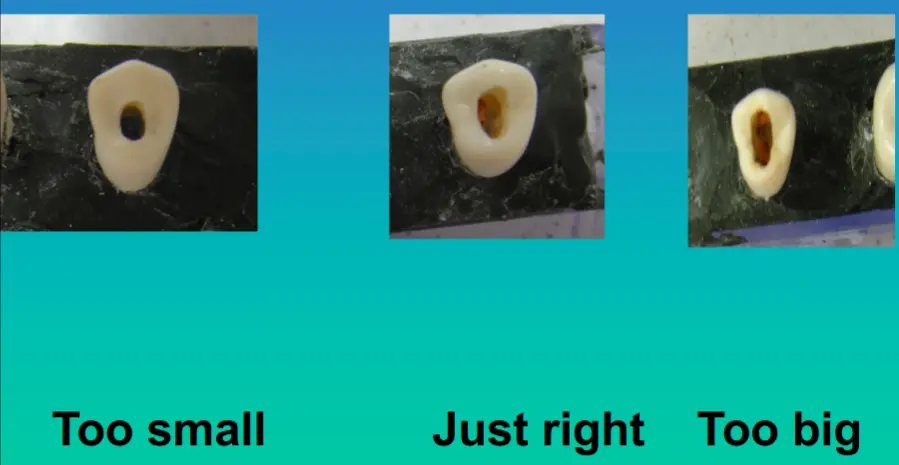
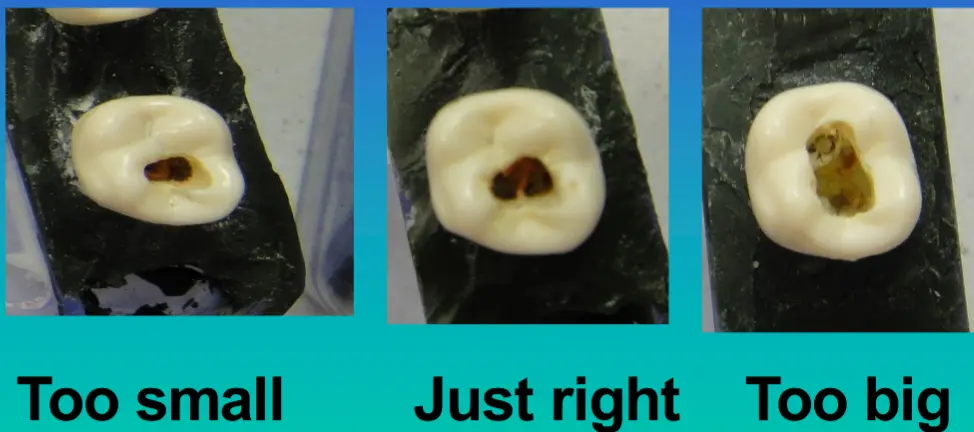
- traditional access occupies about 1/3 of access surface to avoid perforation or missing canals
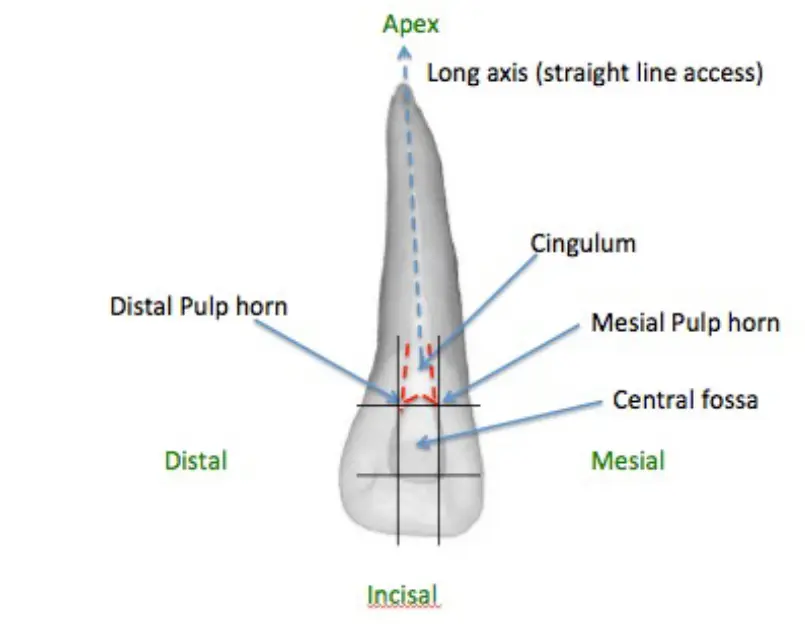
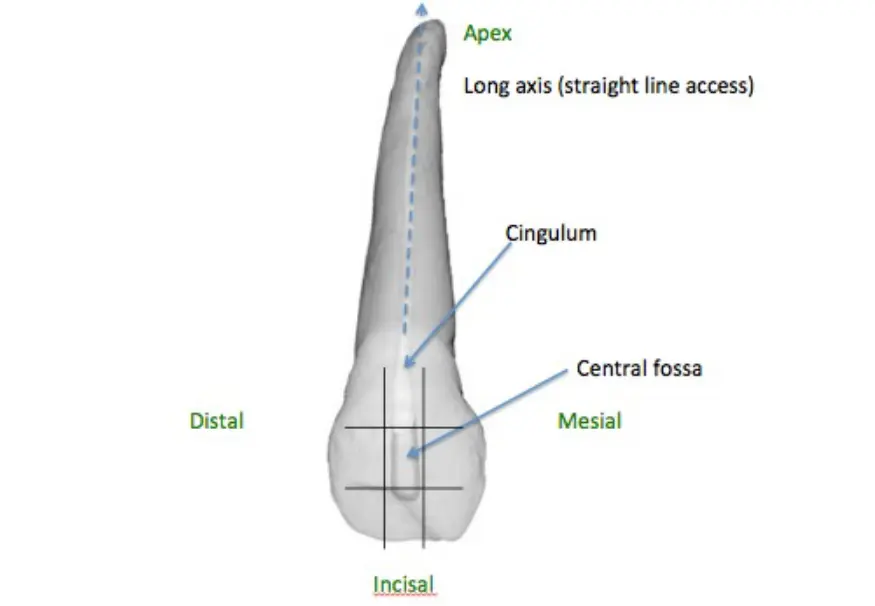
- may have to be extended to allow straight line access resulting in an unstrained instrument approach to the apical foramen
- compromise straight line access for incisors (dont include incisal edge)
importance of straight line access
- permits access to apical third of root canal
- ensure maximum debridement
- prevent instrument flexure and separation
- provide smooth freeway for consistent and passive placement of instruments into canal orifice
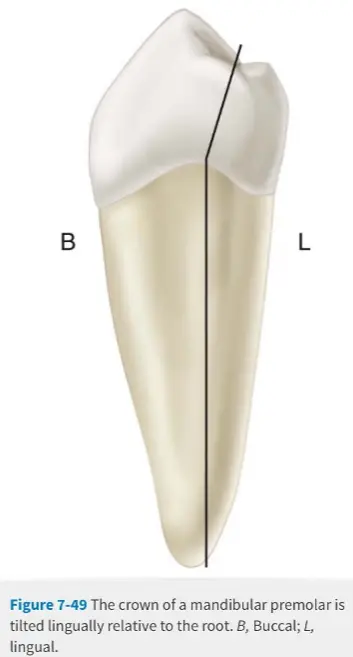
Lower molar and premolar
- straightline access may be difficult, will need to remove lingual shelf of dentine
- access initially perpendicular to enamel with high speed bur
- when through enamel 2 bur widths straight up perpendicular to long axis of the tooth
Pulp Calcification
- secondary dentine is white
- mantle dentine is grey
- tertiary dentine is brown with central white dot of canal
Access to pay attention to
Maxilla
-
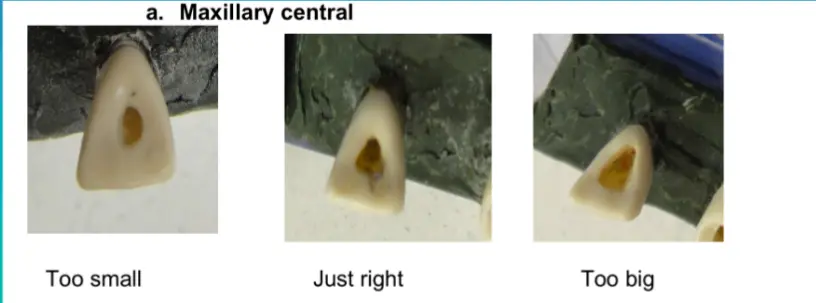
central - triangle and remove palatal shoulder
-
lateral - oval to triangular depending on pulp horns and removal palatal shoulder
-
canine - oval but check for pulp horns, remove palatal shoulder
-
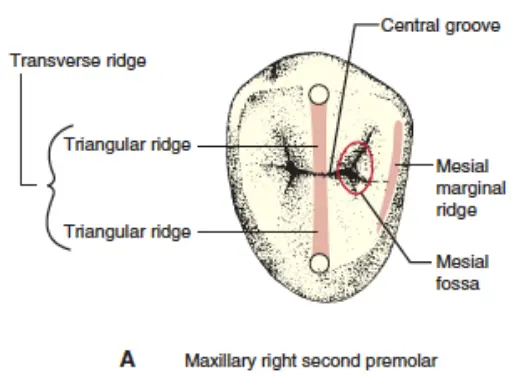
premolar - oval
- 1st premolar
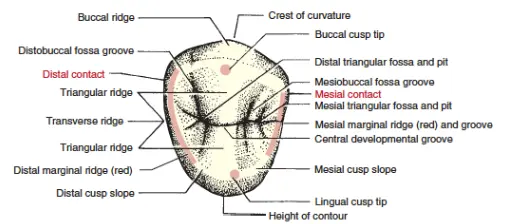
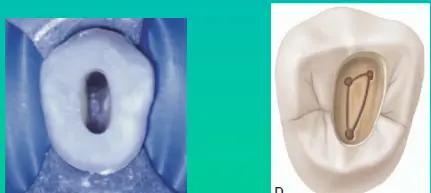
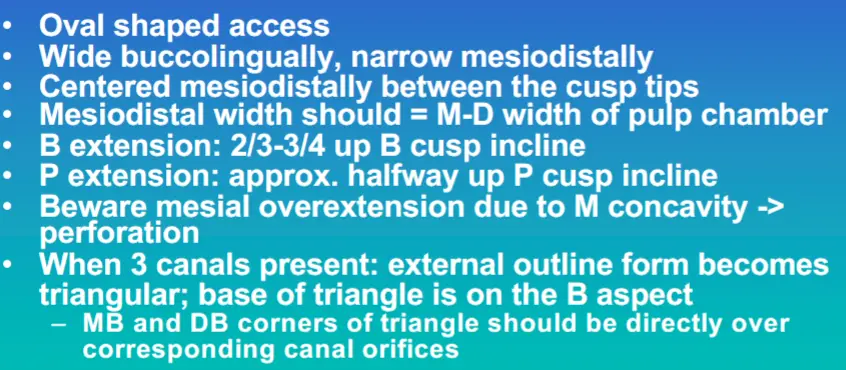
2nd premolar
- 
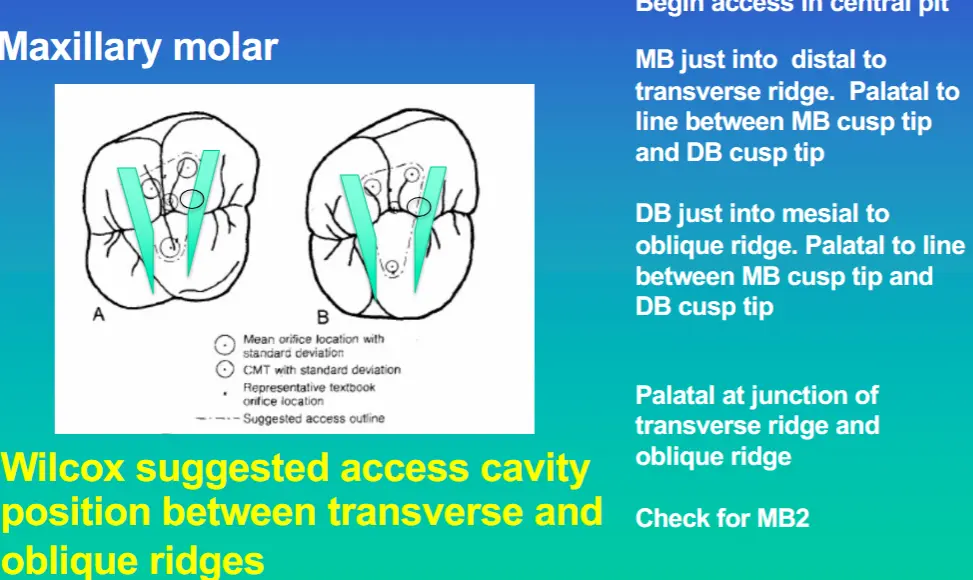
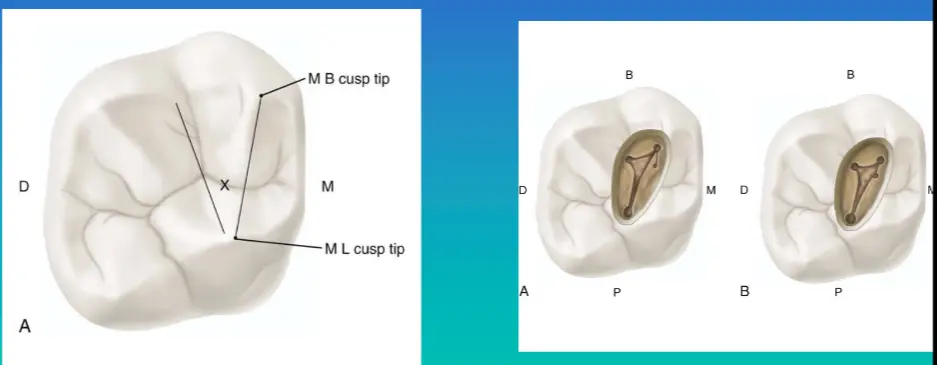
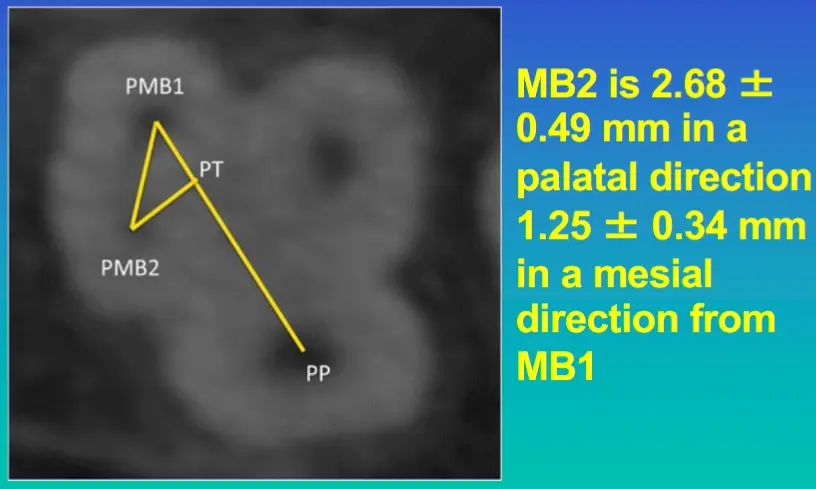
- Maxillary molar - rhomboid/trapezoid toward mesial of occlusal to avoid oblique ridge
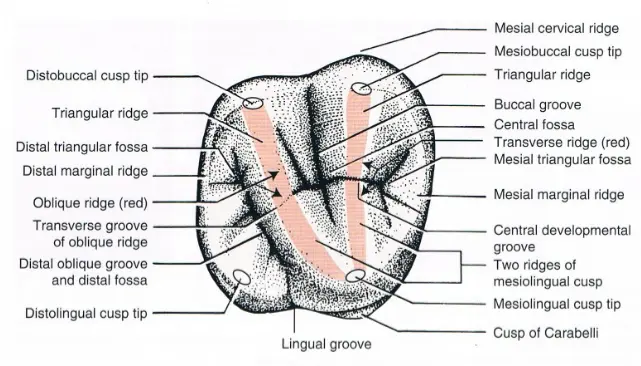
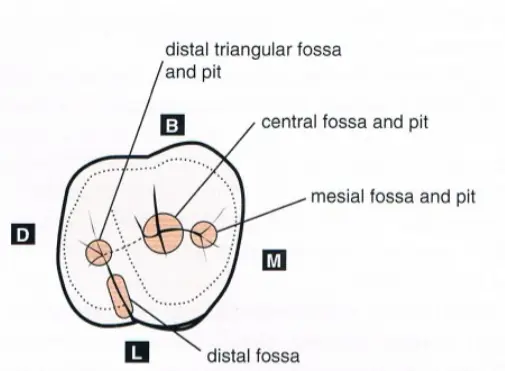
- transverse ridge - buccal and lingual triangular ridge join
- oblique ridge - prominent ridge connect MP and DB cusp
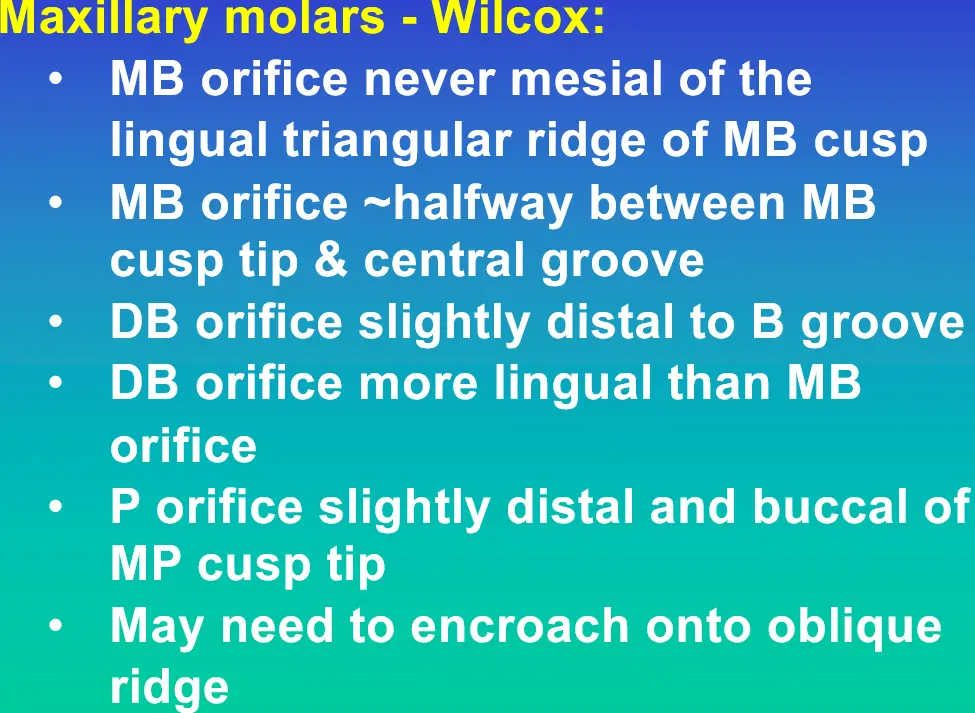
- may need to encroach oblique ridge
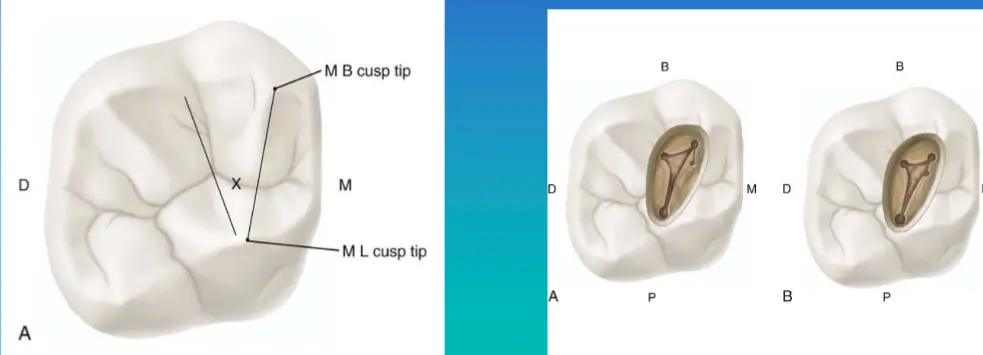
Mandibular teeth
Central
- oval or triangular if pulp horns
- not through incisal edge unless severely worn or difficult to restore and remove lingual shoulder to access lingual canal
- younger patient with pulp horns may be triangular
- as pulp recedes only need oval shape access
Lateral
- same as central
Canine
- same as central
Premolar
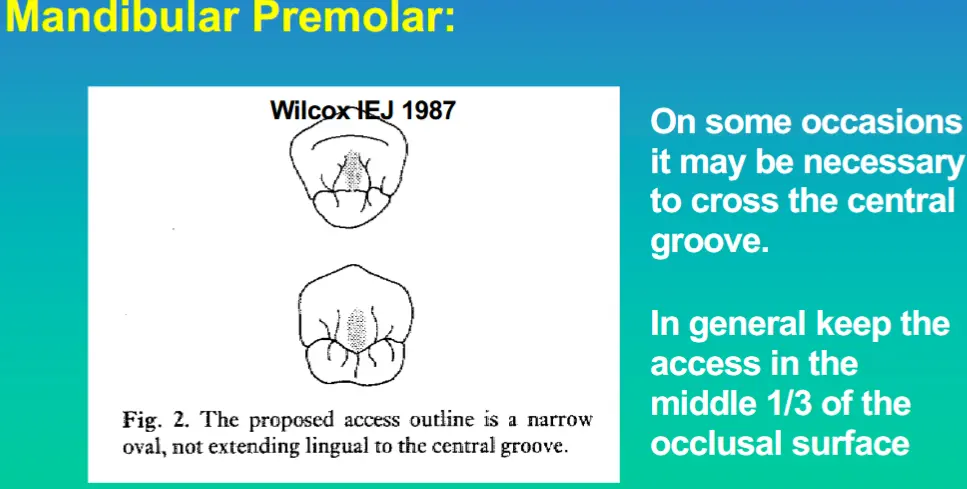
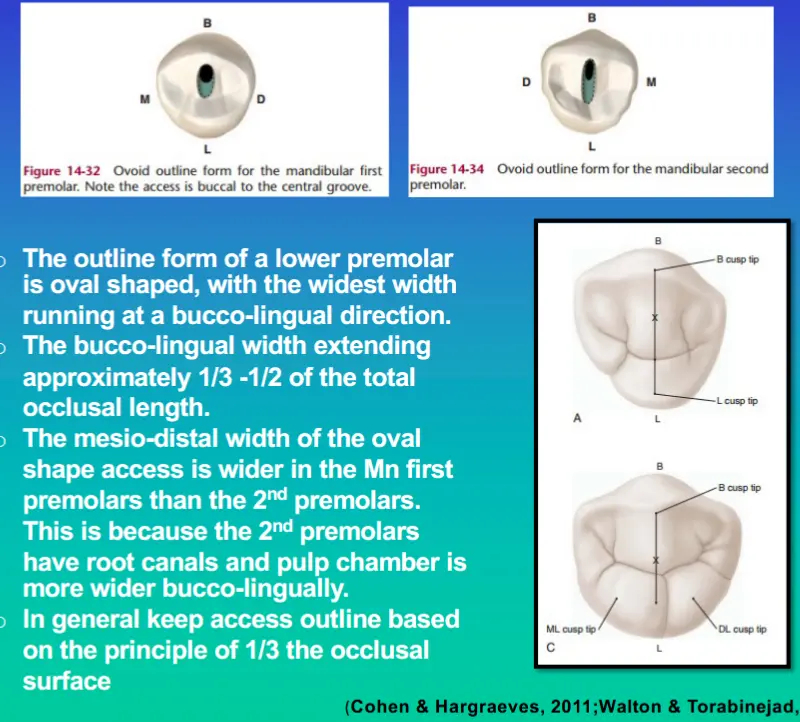
- round to oval to expose canal variation
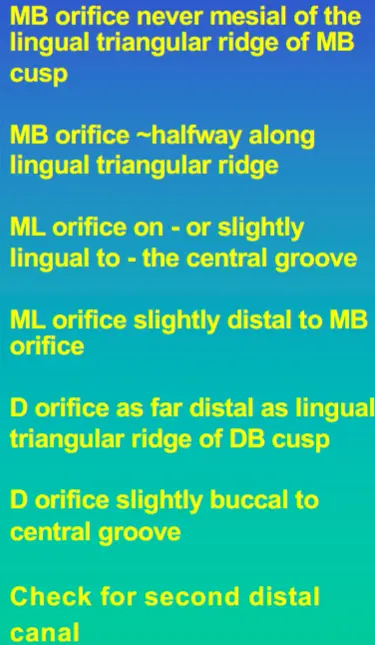
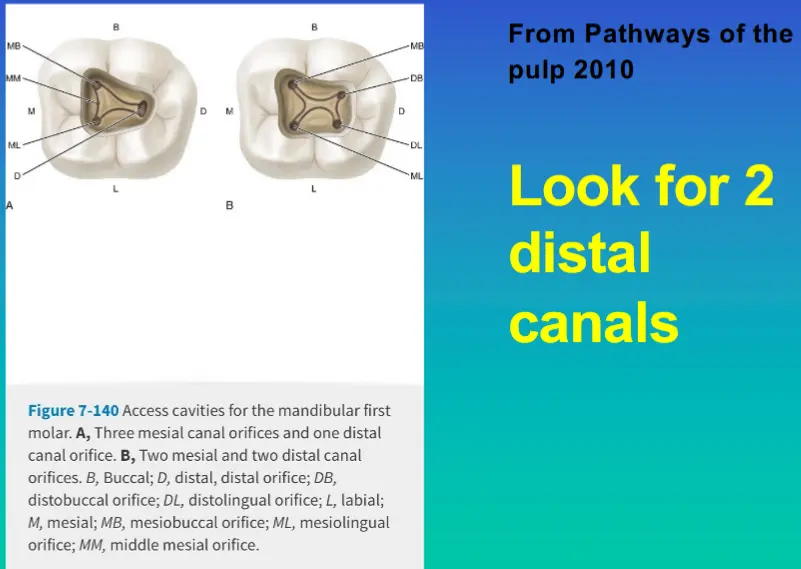
Molar
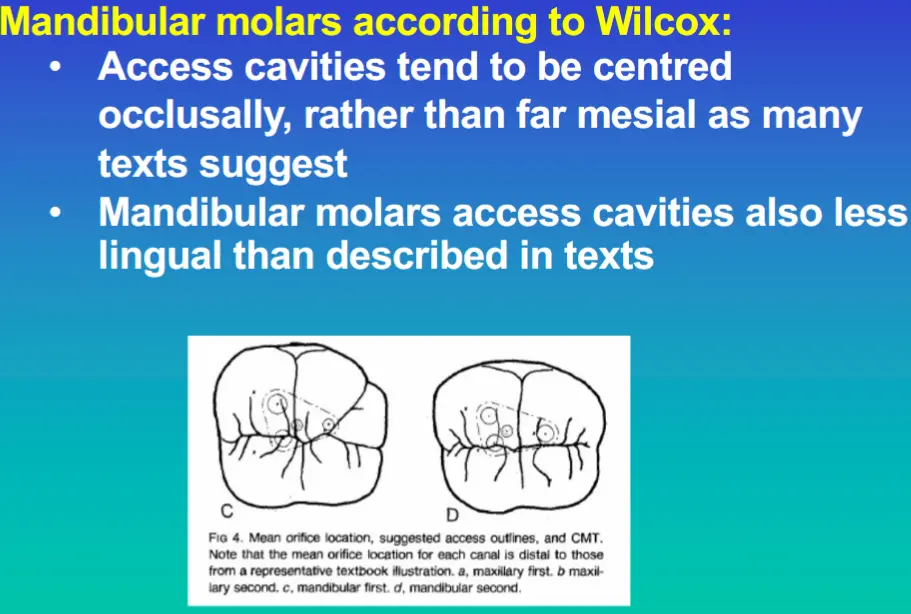
- mesial slightly to buccal
Convenience form
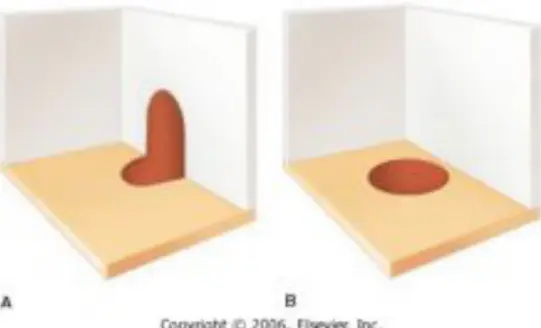
- removes impediments to provide access to canal orifice - locate canals
- remove pulp chamber roof and overhanging dentine
- remove coronal pulp contents that may
- contaminate RC prep
- cause coronal discolouration
- step 2 of root canal freeway
- provide direct access to apical foramen
- allow effective cleaning and shaping of RC system
- adequate obturation of root canal system
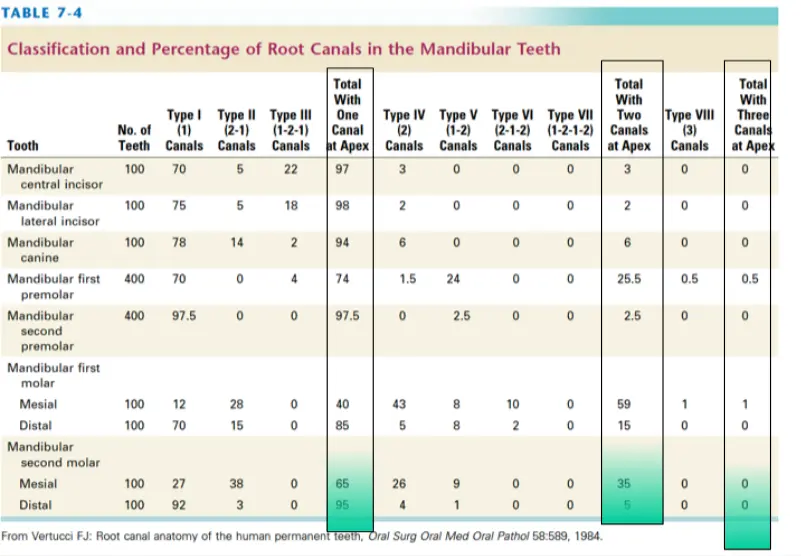
Mandibular molar
- 15% have mid-mesial canal
- C shaped canals in mandibular molar teeth (variation)
- extra MB root - radix paramolaris
- extra DL root - radix entomolaris
Summary rules for access
- the tooth will be devitalised anyways, water not necessary on drill and without can improve visiblity
- Through enamel use .010 bur for anterior and premolars.
- Use .014 for molars
- Through dentine when can’t see bur tip use
.009 or .010 pulp bur for anterior and premolars. Use .014 for molars – water not necessary - Use diamond and water for porcelain
- Know outline form access shapes to remove pulp horns roof of coronal pulp chamber and locate canals – create notches
- Know canal variations
- Know invaginations of roots
- Prepare adequate temporary and interim restoration