Prognosis, recall, evaluation of endodontic treatment outcomes
Monitoring of Endodontic Treatment
why do we need to monitor it?
- because endodontic treatment outcome is not immediately evident
- can see radiographically and histologically, but radiolucency takes time to resolve
what is monitoring
- complete clinical and radiographic exam
when do we monitor
- healing on majority of initial endo cases
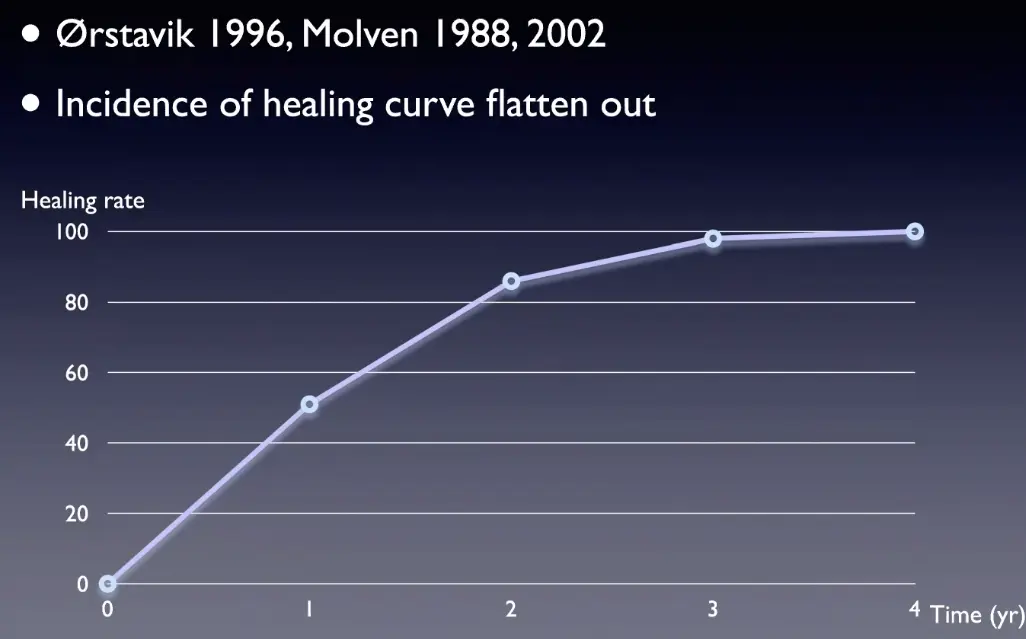
- size and severity assumption is very debatable but fair ()
- big lesion doesnt always mean case is less likely to heal
- but, likelihood of reverse course of event is rare, therefore fair to assumption shrinkage will progress

how do we monitor
- change of lesions size at 1 year
- disappear
- perfect
- smaller
- favourable
- review again at 4 years
- if persisted, intervene
- late healing-rare (molven 2002)
- same, large
- unfavourable, intervention necessary
- disappear
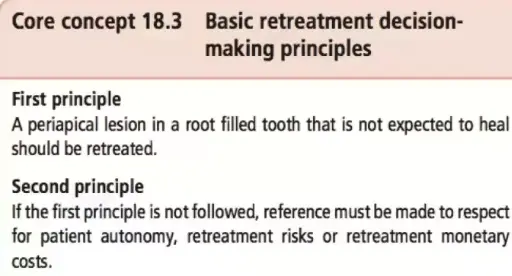
Patient centred outcome
- whats important to us?
- radiographic healing
- whats important to patient
- painfree tooth retention
Treatment Outcome (Success Rates)
- when root canal treatment doesn't work, what do we do?
Why do we need to know about treatment outcome
- using word success -> makes it seem as if operator is completely in control of failure vs success
- better terminology
- healed
- healing
- disease
- disease focus
- implicity
- biological entity and processes which may be beyond clinicians control
what is treatment outcome
- outcome of interest differs on who you are
- for patients
- pain/swelling
- what treatment they'd prefer - less pain during treatment
- satisfaction
- value
- quality of life HRQL
- for clinician
- pain free
- treatment works
- better or worse than no trt
- one better than another
- how much better
how do we measure treatment outcome
policymaker/epidemiologist POV
- number need to treat NNT
- relative benefit of treatment and background risk
- inverse of absolute risk reduction
- compare to standard treatment, how many people need to receive treatment for 1 to benefit from treatment
- hazard ratio
- chance of untoward events occurring in treatment arm as a ratio of that occurring in control arm
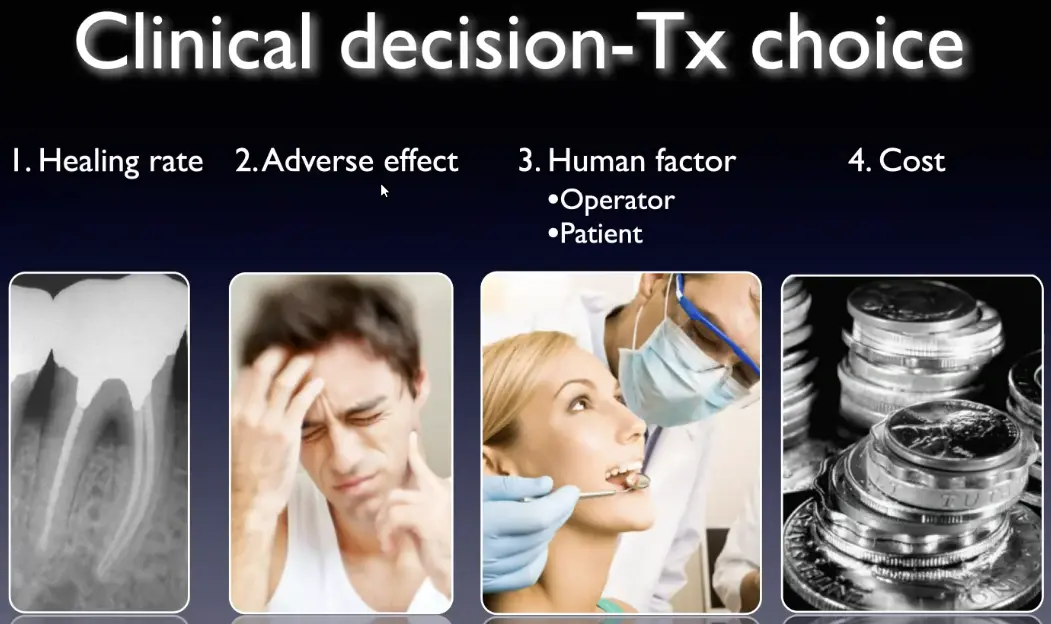
- consider increasing benefit vs minimising harm
patient
- symptoms
- functional
- survival
- healing
levels of evidence
- power to infer causality between studied factors and event of interest
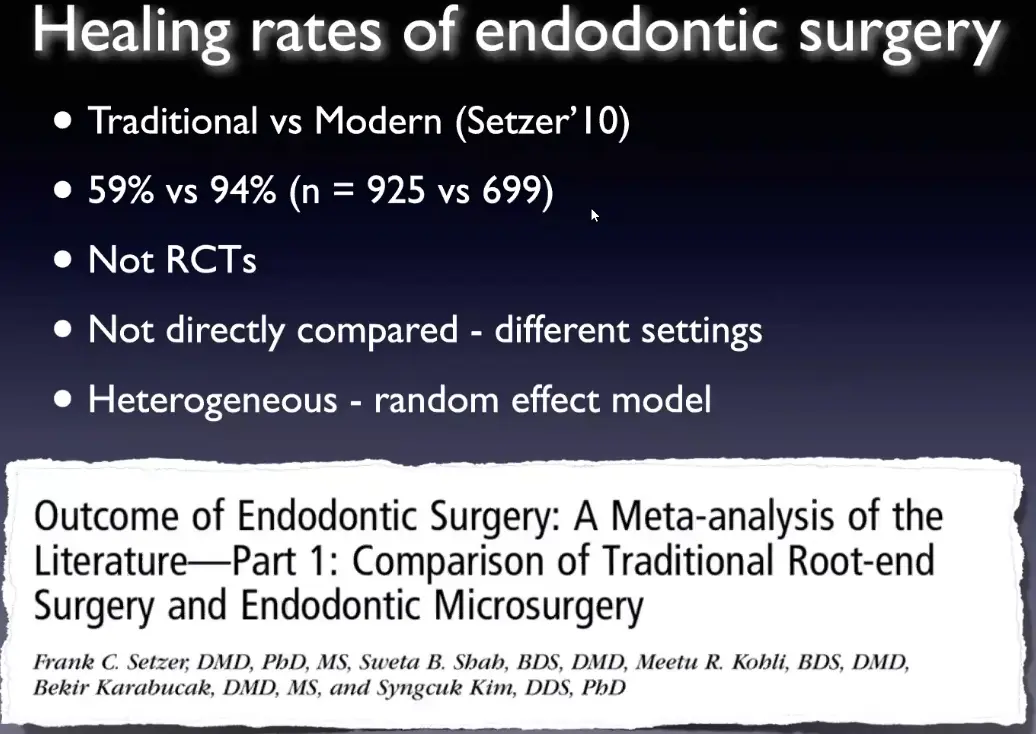
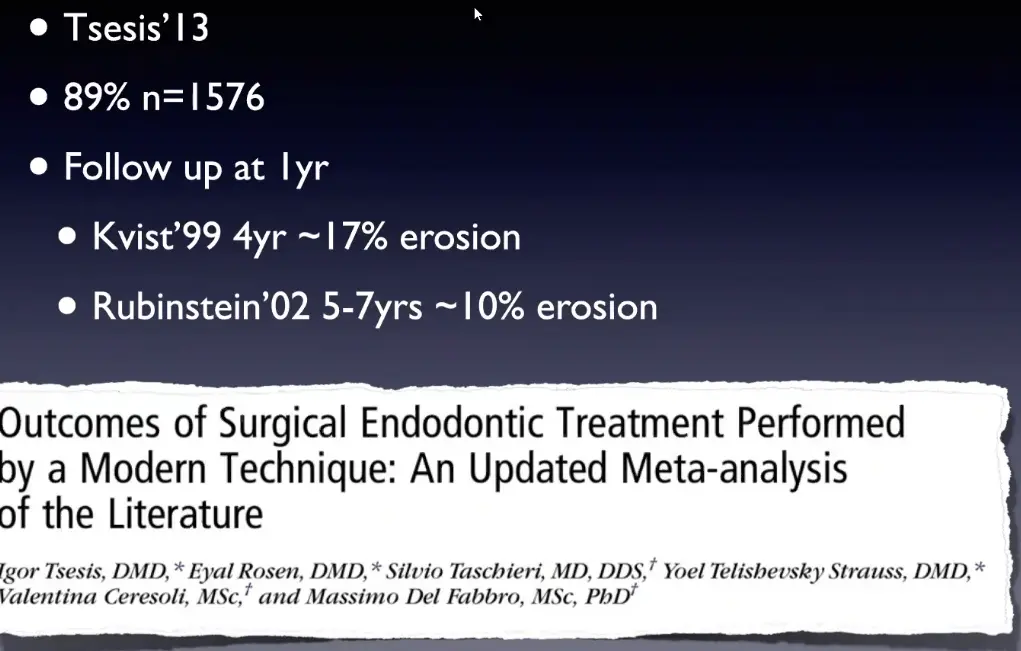
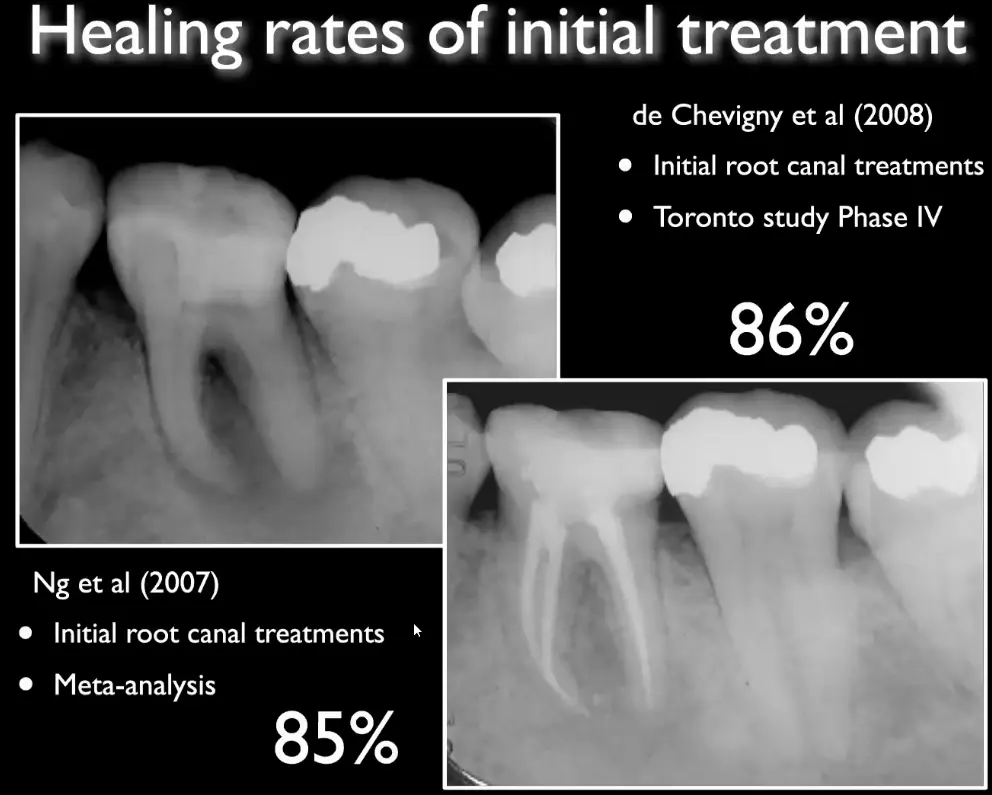
healing rates of initial treatment
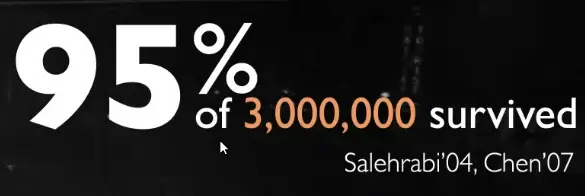
Endo tooth survival rate
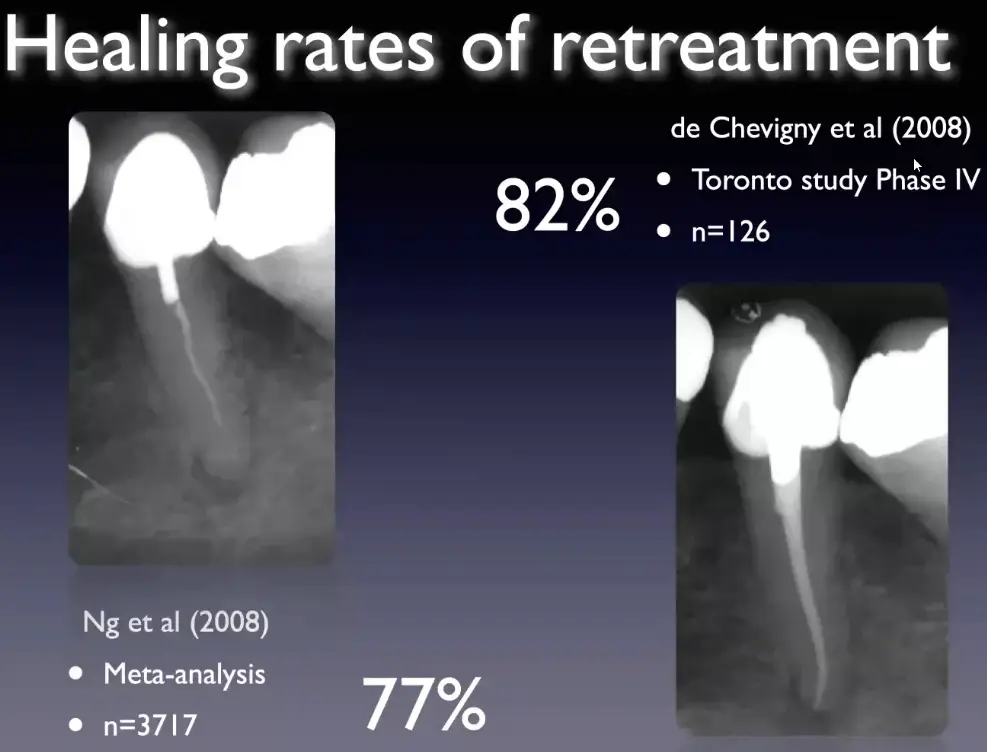
healing rates of retreatment
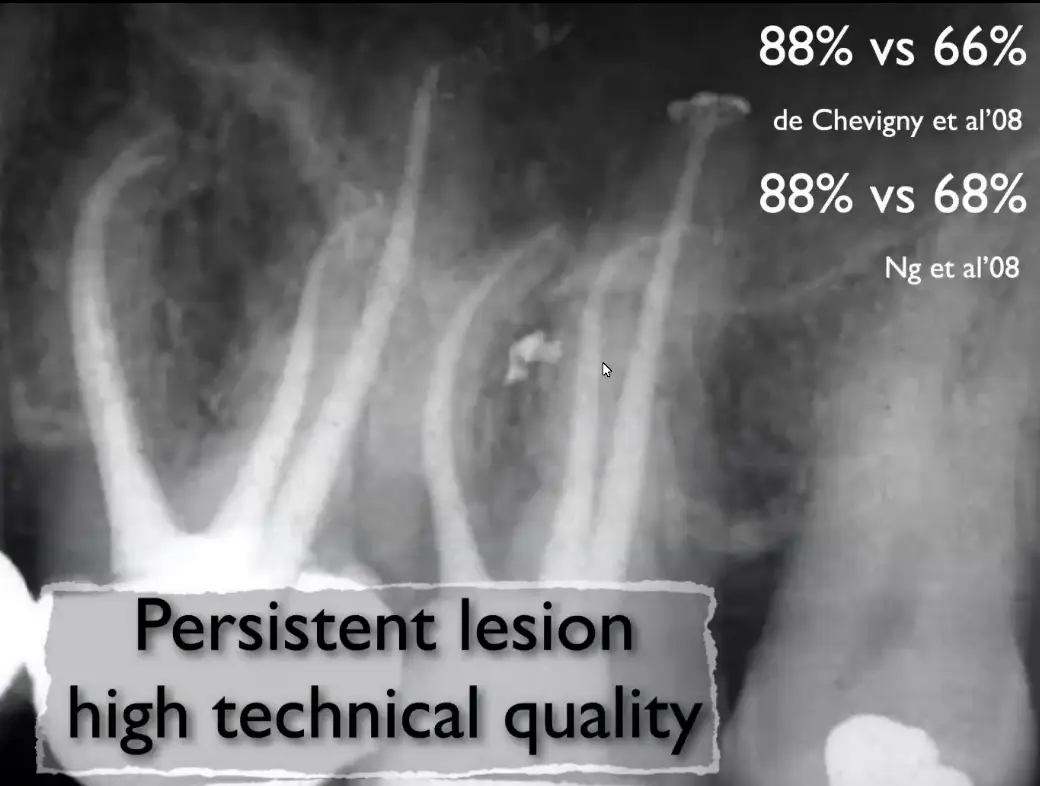
low vs high technical quality persistent lesion healing
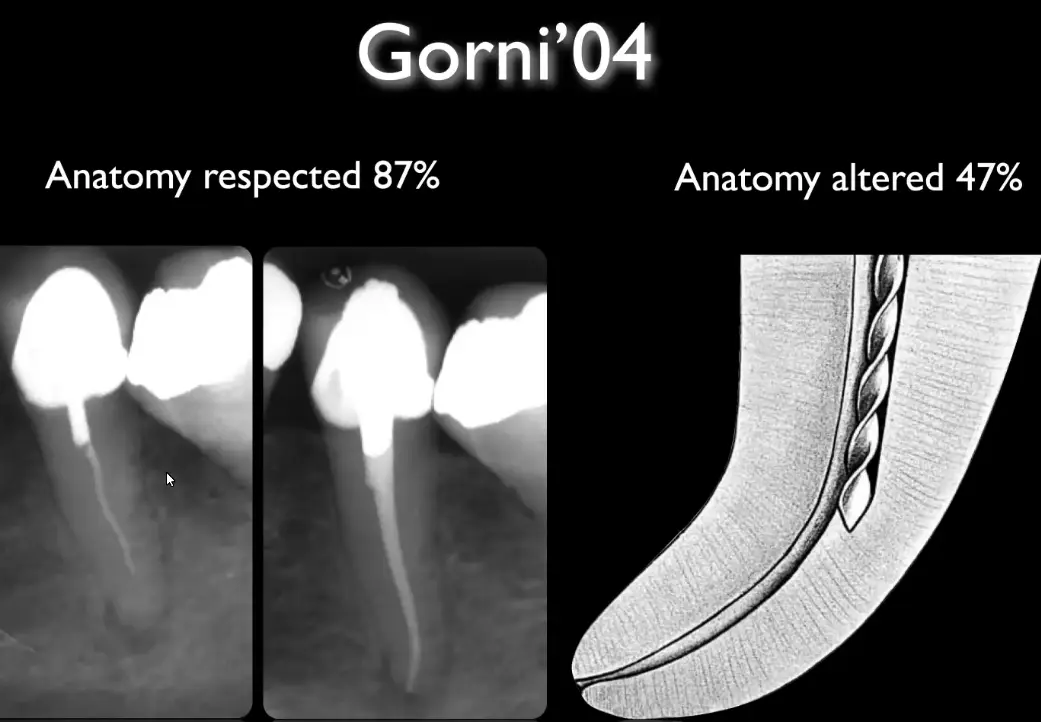
healing rate for anatomy respected vs altered
Modern endodontic microsurgery
- incision, raise flap, remove granulation tissue via curettage
- ultrasonic cleaning of apex
- copious irrigation
- MTA delivery into apex, pack
- suture close