Crown Preparation Design
Principles of crown preparation design
- materials
- function
- appearance
- adjacent teeth
- periodontal tissues
- pulp
- retention of crown to the tooth
Materials
- metal crowns
- metal is strong in thin sections, can be used to overlay and protect weakened cusps
- metal is ductile, can be distorted if too thin, therefore min thickness 0.5mm, occlusal even thicker
- if anticipating greater distorting forces, can reduce tooth more, or adding grooves/boxes
- ceramic crowns
- porcelain brittle when subjected to impact forces, must be sufficiently thick to withstand normal occlusal forces
- core are slightly opaque, so may require extra translucent porcelain on facial surface for natural appearance
- cavosurface 90 degree butt joint
- metal ceramic
- even greater facial reduction required, metal needs to be covered by opaque and then translucent porcelain
- cavosurface depends on if margin is metal or porcelain
- deep chamfer, shoulder, or bevelled shoulder
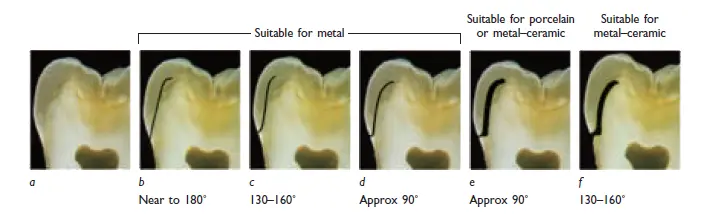
- b
- knife edge margin with cavosurface angle approaching 180 degrees
- c
- chamfer margin with cavosurface angle of 130-160 degrees, most common for metal finishing lines,
- can be deepened for metal ceramic margins
- d
- finishing line with minimal tooth reduction but sharp step, prepared with square ended instrument,
- cavosurface angle approx 90 degrees
- e
- full shoulder with 90 degree cavosurface angle, used for ceramic crowns
- when used for metal-ceramic, metal brought to margin or finished short with porcelain margin
- f
- full shoulder with bevelled margin for metal ceramic crown when margin cannot be seen
Related to function
Occlusion
- areas of crown subjected to heavy occlusal loading in intercuspal position or in excursions of the mandible should be sufficiently thick to withstand these forces without distortion/fracture
- requires adequate reduction of functional surfaces
- if posterior group function, may need to "bevel the functional cusp"
- if the crown is being made to alter occlusal relationship, might need less occlusal reduction to increase OVD
Future wear
- all materials wear, and it depends on occlusion, diet, parafunction etc.
- note areas of wear facets before prep to allow sufficient thickness of crown material
Related to Appearance
labial buccal incisal and proximal reduciton
- adequate tooth surface reduction must be carried out where crown appearance most important (mesial for posterior), proximal to give translucency
Posterior occlusal
- lower occlusal pretty visible compared to buccal, usually
- need good occlusal reduction to get sufficient material over it
- upper buccal more important than occlusal
Crown margins
- position of crown margin in relation to gingival margin affects appearance
- subging margin usually produces inflammation
- at or slightly supragingival less likely to produce inflammation and still not obvious
- metal ceramic crowns with metal margin more obvious, may opt for porcelain margin if smile line is too high
Related to adjacent teeth
clearance to avoid damage to adjacent teeth
- need full bur thickness between preparation and contact area
Path of insertion
- when teeth are uneven, sometimes the crown cannot be seated due to overlapping adjacent teeth preventing its insertion
- adjustment of crown to allow seating may then open contact
- either reshape adjacent tooth or design prep at an angle which permits crown insertion
Oral hygiene and technical considerations
- need good margins which are able to be cleaned
Related to periodontium
- cavosurface angle should be designed so that crown surface can be made in line with tooth surface
- insufficient reduction at margin results in overbuilt crown, producing a plaque retentive area at margin
- make sure stable perio,
- if unstable, medium term temp with perio surgery, better OH, crown lengthening etc. may be necessary and adjust final margins after healing
Related to the pulp
- minimal thickness of dentine must be preserved to protect a vital pulp
- depends on age of pt, condition of dentine, type of prep
- copious water cooling, sharp burs and gentle techniques to limit potential damage to the pulp
- still a risk of pulpal pathosis after tooth prep, which is a risk patients must understand
Retention
Mechanical
- preparing the tooth to a retentive shape and cementing crown with luting cement, which is not chemically adhesive
- crown is retained by combo of mechanical design features
Adhesive
- adhesive luting or bonding cement that bonds chemically or micromechanically to both tooth surfae and resto, dont need to rely on shape of tooth preparatoin
- range of cements;
- chemically active resin based, chemically bodn to fresh grit blased surface and locks micromechanically into etched enamel and bond to it, including dentine bonding agent
- glass ionomer luting cement, adhere to enamel and dentine but not cast metal or other esto material, rely on mechanical bond
- composite luting cement, retains by micromechanical retentive on tooth surface, etched enamel, dentine tubule and restoration
- RMGIC, chemical of glass ionomer with strength of composite resin
**Retention for conventional crowns
Retention against vertical loss**
- crown inserted from occlusal/incisal direction can be lost in reverse direction
- axial forces have three categories
- direct pull on crown from sticky toffee etc, rempros or some leverege in bridge deisng
- forces arising as a component of lateral force against inclined plane
- force from dentist deliberately trying to remove crown
- path of insertion may be inclined away from long axis if anterior crown is constructed to give appearance of proclination or retroclination
Interlocking minor undercuts
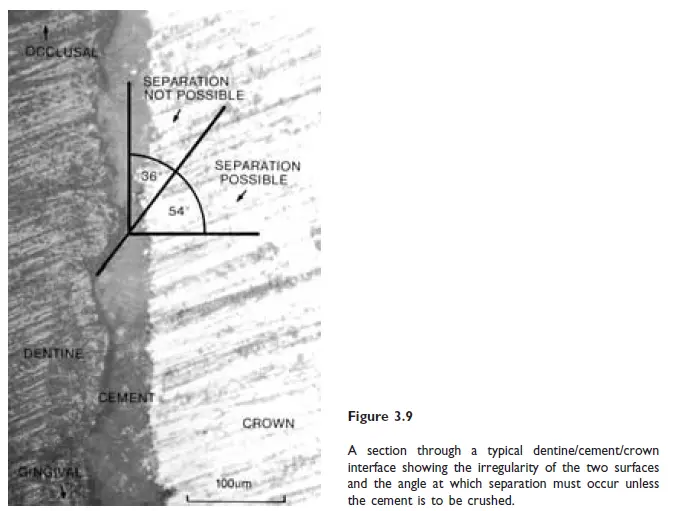
- microscopic undercuts from surface irregularites in dentine preparation, grit blasted cast metal surface cannot slide parallel to the dentine preparation parallel or at an angle, needs greater angle to overcome undercut and crush/shear the cement
Taper of the preparation
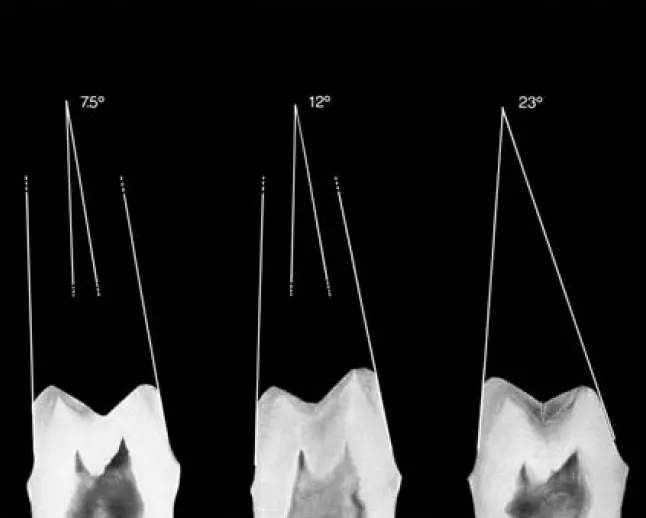
- depending on size of these minor undercuts and compressive strength of cement used, taper of prep and its length determine degree of retention against axial unseating forces
- parallel prep prevents cement extrusion from crown and leaves excessive cement thickness at margin and occlusally
- once taper extends past 30 degrees, failure through loss of retention becomes common
- taper of 7 degrees is optimum with cement film thickness and maximum retention
- impossible to know 7 degrees, so we aim for 10-20 with no visible undercut
Length of preparation
- greater length creates a more retentive crown
- the shorter the crown, the more parallel the taper should be
- if clinical crown too short for adequate retention, needs to be build up with a core or crown lengthening
Retention against other displacing forces
- provided that a taper is uniform, it can only be lost along its patho f insertion, but some cannot be made with uniform taper
- incisors can be prepared with a small angle of taper between M and D surfaces
- same with partial crowns
- needs to be retentive in all directions and needs features to prevent loss in these directions
- all materials have flexibility and retention prevents breakdown of cement, leakage etc.
- usually grooves or pinholes
Avoiding fialure from other causes
**Fracture of distortion of tooth tissue
- remaining tooth must be sufficiently robust, for completed crown, temp crown impression try in and cementation
Fracture of ceramic crowns - stresses are developed within ceramic crowns as a result of contraction on cooling after firing cycle, they can propogate and produce failure if crown subjected to sufficient forces
- these stresses are concentrated around sharp internal angle of fit surface, so external angles of ceramic crowns should be rounded to reduce stresses
Metal distortion - need a stiff continuum of metal to prevent distoriton and bending
- U shaped bar from Mesial to distal
- ridge of metal around entire periphery of prep
Casting difficulties
- external angles of complete metal crowns should be rounded to prevent
- stone die material not flowing into impression adequatly, trapping air bubbles in sharp angles
- sharp edges might be damaged at wax up stage
- investment material may not flow adequately into wax pattern
- cement will flow less readily
Designing specific crown preparations
Posterior complete crown preparations
**All metal crowns
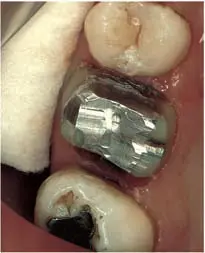
- variations in clude additional axial grooves or pinholes to limit path of insertion when pair of opposing walls are more tapered than is desirable
Metal ceramic
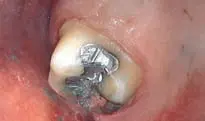
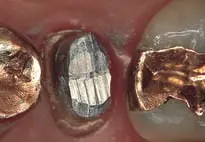
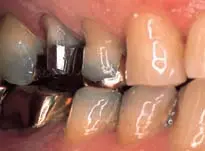
- usually have an all metal lingual surface and porcelain buccal and occlusal surface
- decision where to finish porcelain will influence prep,
- margin may be deep chamfer or a bevelled shoulder to allow a small line of metal to show, simplifying the finishing of the crown margin
Anterior crown preparations
**Ceramic
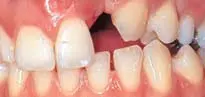
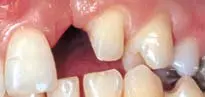
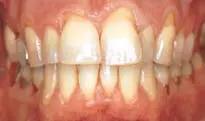
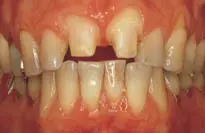
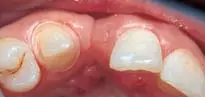
- inadequate
- made adequate by rounding extenral and internal line angles, greater reduction
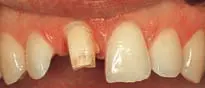
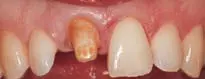
Metal ceramic
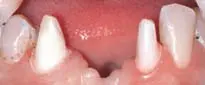
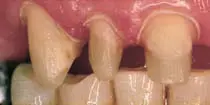
- much greater buccal reduction and less lingual reduction where possible (compared to ceramic)
- deep chamfer margin on labial extending into proximal areas, into a shallow chamfer palatally where only metal to be placed
- more important mesially where the porcelain will show
Post retained crowns
- same for vital crown, except no pulp to protect means the shoulders can be wider and the core thinner than for an equivalent vital tooth prep
- because no pulp but also because the core is reinforced by a preformed metal post or whole post and core is cast