Introduction and Terminology
Indications and Contraindications for crowns
crown vs fillings for caries
- fillings are better for primary, secondary caries
- crowns can be better for larger lesions and cusps lost
General indications for crowns
- failing restorations, lack of shape, discolouration
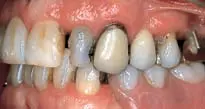
- very large restorations have unpredictable long term durability
- lost dentine often needs to be replaced by suitable core of restorative material
- sometimes needs endo first
- trauma
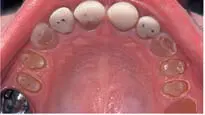
- gross tooth wear
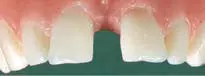
- peg shaped upper lateral incisors
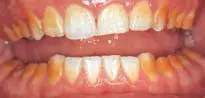
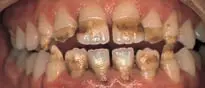
- amelogenesis imperfecta
- dentinogenesis imperfecta
- enamel hypoplasia
- changing shape and size of teeth/aesthetics
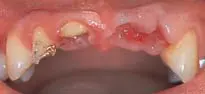
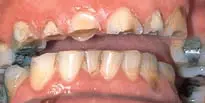
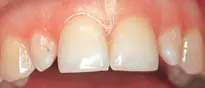
Mechanical Problems
- sometimes a a filling is sufficient, but pattern of damage to tooth gives concern about retention of the restoration, strength of remaining tooth, or strength or restorative material
- if a filling fails, the next option is a larger restoration or a crown
- if a crown fails, another crown may not be possible and extraction may be the only option left
- deciding between filling and crown
- how real is the risk of mechanical failure of the filling or surrounding tooth? what can be done to minimise this risk?
- how much more destruction of sound tooth tissue is necessary to make a crown?
- more conservative option first is usually better
Indications for anterior crowns
- caries and trauma
- non vital teeth
- tooth wear
- only when cause cannot be identified or eliminated
- hypoplastic conditions
Alternatives to anterior crowns
- internal and external bleaching
- composite restorations
- composite and porcelain veneers
- composite veneers quite reversible, porcelain are not
- porcelain more costly
alternatives to posterior crowns
- amalgam restoration
- composite restoration
- composite inlay and onlay
- ceramic inlay and onlay
Types of Crown
types
- Anterior Complete crowns for vital teeth
- ceramic crowns
- metal ceramic crowns
- other types
- Anterior crowns for root filled teeth
- Posterior complete crowns
- Posterior partial crowns
Anterior Complete crowns for vital teeth
Ceramic Crowns
- traditional fused porcelain jacket crowns
- 1-2mm thick porcelain crown covering entire tooth
- alumina incorporated to porcelain powder which is fired in a furnace shaped on an impression of the tooth
- pressed ceramic crowns
- ceramic material pressed at high temperature and pressure onto a die then building up layers of traditional porcelain to create right contour and shade
- milled ceramic crowns
- core produced with strong ceramic, then additional porcelain added to complete the crown
- zirconia cores
- zirconia core with conventional porcelain built on top
- cast crowns
- ceramic cast placed in ceramming oven, which it undergoes crystallisation conversion and becomes much stronger
- then staining and porcelain in a porcelain furnace
- reinforced porcelain
- alumina substruture formed and coated with glass fired powder, which will infilitrate the pores after firing for several hours
ceramic crowns
- advantages
- appearance
- stability
- cost
- plaque
- brittleness
- disadvantages
- marginal fit
- brittleness
- removal of tooth tissue
Metal ceramic crowns
- PFM
- 3 groups of alloys
- precious metals containing platinum and gold
- semi precious containing palladium or silver
- base metal alloys containing nickel and chromium
- porcelain fired to the metal at a temperature that doesn't melt or distort the metal
- advantages
- strength
- minimum palatal reduction
- adaptability (secondary retentive factors)
- can be cast, soldered or laser welded
- Disadvantages
- strength
- stronger than natural dental tissues so can cause root or tooth prep to fracture in trauma
- appearance
- destruction of tooth tissue
- cost
- strength
Cast metal acrylic or composite faced crowns
- usually long term provisional restorations
Fibre reinforced composite crowns
- long term provisional crowns / bridges
Anterior crowns for root filled teeth
- endo access + crown prep leaves insufficient dentine to support crown
- therefore we need retention via post fitted into enlarged root canal
types
Composite/GIC core and crown
- if sufficient dentine remains, endo access cavity can be filled with GIC or composite
post and core and separate crown
- crown is either ceramic or metal ceramic crown
- post and core can be made in laboratory from impression of post hole (indirect)
- usually has core and sometimes diaphragm cast with the post
- adaptable, can be used in very tapered root canals or elliptical shaped canals,
- ready made post can be purchased and cemented into post hole which is prepared with a matching drill of same diameter as the post (direct)
- composite core built up directly after post cemented
- avoids need for temp crown
- strong and can be more retentive
- direct preferable to indirect when possible
- direct post materials
- precious metals - little advantage over non precious unless diaphragm is needed
- non precious metals - usually stainless steel, most common, strong
- carbon fibre - black, difficult to disguise
- quartz fibre
- titanium
- post shapes
- parallel smooth or serrated
- preformed metal with composite core or preformed plastic post
- more retentive than tapered smooth, serrations increase retention
- tapered smooth or serrated
- cast gold or other alloy
- least retentive but if long and good fit, retention usually sufficient
- serrations increase retention but weaken post
- easy
- less likely to perforate
- diaphragm may be added to cover root face
- parallel threaded
- fine threaded - very retentive, self tapped
- coarse thread - cannot be removed by techniques to remove other types of post
- tapered threaded
- base metal
- considerable dentine stress, not to be used permanently
- removal difficult and risks splitting the root
- parallel smooth or serrated
- choosing post systems
- usually preformed serrated or cast parallel serrated post
- preformed preferable for single uncomplicated crowns
- cast parallel serrated preferred when core needs to be extended as a diaphragm to cover part or all of root surface when stronger core is needed
- tapered smooth cast post and core used for very tapered or oval root canal
One piece post crown
- insufficient space within crown for both retentive core and separate crown
- crown made of metal ceramic material with post cast of crown is usually solution
- very short clinical crown or lower incisors
Posterior Complete Crowns
Cast metal crowns
- metal alloy groups
- 1 (or I or A) soft used for small inlays
- 2 (or II or B) medium used for large inlays
- 3 (or III or C) hard used for crowns and bridges
- 4 (or IV or D) extra hard used for larger bridges, implant frameworks and denture clasps
- used when patient doesn't mind metal or it wont show during normal movements of the mouth
- requires minimum reduction of tissue, occlusal surface readily adjusted and polished
- cost is least
- most convenient for rest seats, guide planes, reciprocal ledges and undercuts with partial dentures
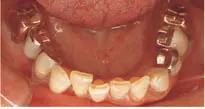
Metal ceramic crowns
- better appearance than cast metal
- porcelain on buccal and occlusal,
- requires more tooth tissue removed for thickness of porcelain
Ceramic crowns
- more preparation required to allow for crowns of adequate thickness
- need to be careful with occlusion
- not for bruxists
Posterior partial crowns
three quarter crowns
- cover 4/5ths of the tooth surface
- mesial distal, occlusal lingual
- retained by grooves on MOD surfaces
- always made of cast metal, and are used when buccal surface of tooth is intact and reducing it would be unaesthetic, reduce strength of prep
- more conservative
Cores for posterior crowns
amalgam, composite or GIC
- pins can be used, not for root filled teeth, used rarely
- most common post is parallel serrated preformed metal post
- Nayyer technique can be used where pulp chamber is intact
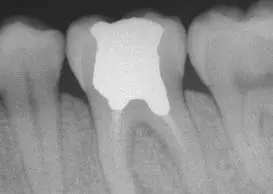
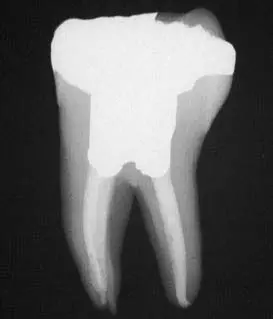
cast posterior cores
- pretty outdated
- can be used for single rooted premolars when post hole is tapered and when diaphragm is needed
Tooth considerations
- strategic value
- not all teeth are equal
- depends on other teeth and how useful this one is
- appearance
- usually consider replacing restorations before a crown
- crown pulp and perio condition
- deep caries or fractures will make crown difficult
- perio surgery can be used to expose margin of the fracture
- always vitality test
- if recent endo and unsure of outcome
- wait and see if symptoms settle
- repeat if unsatisfactory
- proceed with core and temp but wait for final crown until symptoms settle
- treat perio first
- occlusion
- canine guidance, group function
- contact should be either crown or tooth, not at their junction
- root length
- root to crown ratio
- bone suport
Decisions to be made
- is tooth kept or extracted
- restorable vs non restorable
- crown or filling
- any preparatory treatment needed before crown
- ortho, perio, endo
Planning
- aesthetics
- wax mock up, informed consent
- modified study cast
- shade, get bleaching done prior to shade match
- need for a core
- sufficient tooth structure for crown prep?
- otherwise built up via core,
- what core material
- decide position of crown margin
- type of crown and material
- prep design
- appointments and lab stages`