Dental Dam
- integral part of root canal treatment process
- no direct evidence that dental dam enhances outcome of periapical healing but there is indirect evidence
- OHS reasons to use
- Ahmad IEJ 2014
- may improve tooth survival
- Lin et al J endo 2014
- Kwak et al J endo 2019
- May improve periapical healing if prefabricated post is placed under dental dam
- Goldfein et al J endo 2013
advantages
- improve visibility
- protects patient and operator
- aspiration, swallowing, debris, medicaments, irrigants
- protect operator from infection pt mouth
- minimise aerosol risk
- reduces bacterial contamination
- isolation from saliva, haemorrhage, other tissue fluids
- operating efficiency
disadvantages - time consumption
- additional cost
- patient objection
Aseptic technique
- infection control method and precautions taken during invasive clincial procedures to prevent transfer or micro organissm from healthcare work, procedure equipment or immediate environment to the patient
- achieved via asepsis of key parts and key sites
- key part (active)
- critical parts of procedure equipment that come in contact with key sites, liquid infusion or with other key parts connected to patient via medical device, if contaminated during procedure, key parts provide direct route for transmission of pathogen onto or into patient
- key site
- open wounds, insertion or puncture site
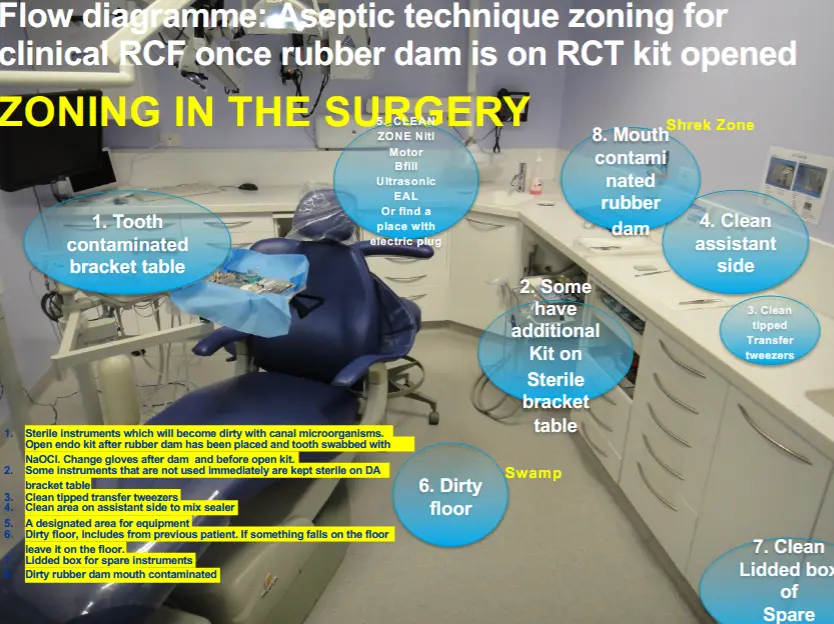
Aspetic technique zoning for endo
- tooth contaminated instruments which will become contaminated with root canal microorganisms on over patient bracket table
- open endo kit after rubber dam has been placed and tooth swabbed with NaOCl
- change gloves after dam and before open kit
- sterile instruments which have not yet been contaminated with any microorganisms on nurse bracket table
- asepctic tippes transfer tweezers
- clean area on asistant side to mix sealer
- designated clean (aseptic ) are for equipment
- contaminated by saliva
- heavily contaminated floor
Armamentarium
- dental dam
- plastic or metal
- dental dam forceps
- dental dam clamp
- anchors dam to tooth
- preferably wingless, retain with floss ligature
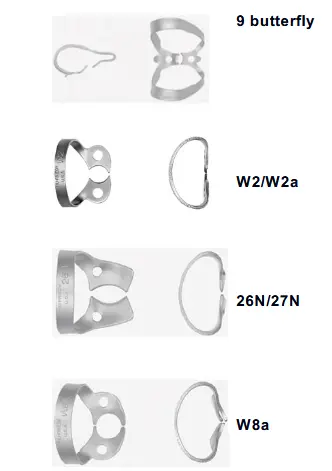
- 9 butterfly
- W2 anterior/premolar
- W2a anterior/premolar
- 26N lower molar
- 27N lower molar
- W8a upper molar
- plastic dental dam frame
- dental dam punch
- plastic instrument
criteria to evaluate efficacy of RD isolation
- stability of clamp
- no saliva contamination leakge to access canal system
- no leakage of irrigating solution to patient mouth
- ultimately patient should not be at any discomfort because of using RD isolation
problems
- allergy to latex
- use non latex
- discomfort of gingivae
- block + infil or extra infil
- loss of tooth stucture
- place clamp on adjacent tooth, may need to cuff multiple teeth
- use multiple clamps or wedget
- may require crown lengthening prior to RCT
- use stainless steel band
- restore tooth with composite (possibly)
- ortho or fixed bridge
- clamp adjacent, multiple tooth iso
- floss ligature for retention
swab site before access after dental dam is placed
- disinfect with 4% NaOCl