MODULE 6
#DEN4001
#D4/S1/W6
#Paediatrics
#Endo
Decisions regarding vital pulp therapy
VItality status
- normal pulp
- symptom free, responds regularly to vitality tests
- no signs of inflammation or distress
- reversible pulpitis
- pulp with inflammation capable of healing
- inflammation that can be resolved with appropriate healing
- symptomatic or asymptomatic irreverisble pulpitis
- inflammation of vital pulp that cannot heal
- inflammation beyond reversible treatment
- necrotic pulp
- pulp tissue has undergone cell death
- complete loss of vitality, necessitating appropriate intervention
diagnosis process includes
- comprehensive med hist
- dental hist and treatment review
- subjective evaluation of symptoms/complaints
- objective exam (IO EO hard tissue)
- radio assess
- clinical assess (vitality test)
Consider extraction when
- infectious process cannot be arrested by pulp therapy
- bony support cannot be regained
- inadequate tooth structure remains for a restoration
- excessive pathological root resorption exists
Vital Pulp therapies
- indirect pulp cap
- preferable to pulpotomy when reversible pulpitis
- complete caries removal not needed for success
- restored with material that seals tooth from microleakage
- direct pulp cap
- indicated in primary tooth with normal pulp following small mechanical or traumatic exposure
- MTA/CaOH placed in contact with exposed pulp tissue
- not recommended, pulpotomy better
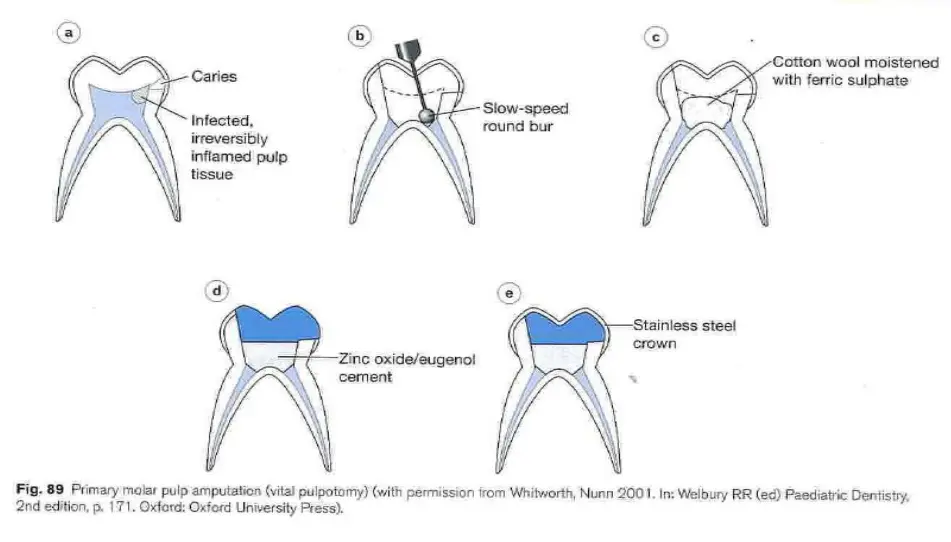
- pulpotomy
- indicated when caries removal results in pulp exposure or after traumatic pulp exposure, must be reversible or normal pulp
- coronal tissue amputated, radicular tissue is vital without suppuration, purulence, necrosis or excessive haemorrhage
- MTA/ZOE fill then SSC
Pulpectomy in deciduous dentition
- indications
- evidence of pulpal necrosis
- tooth is restorable
- prolonged history of spontaneous pain
- buccal or EO swelling and increased mobility
- radiolucent furcation involvement or PA RL on radiograph
- persistent bleeding during pulpotomy (hyperaemic pulp) or suppuration or purulence (pulp necrosis)
- contraindications
- relevant med hist (immunodeficiency)
- tooth unrestorable
- periradicular involvement extending to permanent tooth bud
- pathologic resorption of >1/3 root
- excessive internal root resorption
- mechanical or carious perforation of floor of pulp chamber
- presence of a dentigerous cyst
Clinical procedure
- preop radiograph, estimate WL
- LA, rubber dam
- remove caries
- gain access to pulp chamber
- remove coronal pulp
- identify orifices or root canals
- instrument canals
- irrigate
- dry canals (temporise if 2 stage)
- obturate canals (GP contraindicated as doesn't resorb)
- resotre coronal cavity (IRM -> GIC)
- postop radio
- SSC
- review every 6-12mo
FIlling materials for deciduous pulpectomy
- property should resorb at rate similar to that or roots of treated deciduous teeth
- antibacterial effects are desirable
- combination CaOH with iodoform
- endoflax or vitapex
- greatest success, best option for deciduous root filling
- vitapex may wash out from some canals, but teeth still remain asymptomatic most times
- non significant antibacterial effect
- iodoform
- KRI paste
- moderate antibacterial effect
- good success rate
- non reinforced ZOE
- tends to resorb slower than primary roots
- associated with over retention of deciduous tooth
- possible ectopic eruption of succedaneous tooth
- pure CaOH
- contradictory results
Deciduous pulpectomy prognosis
- success rate 75-95%
- when preservation of tooth not deemed essential, clinicians may advise considering exo