Bridges
Replacing missing teeth
- shortened arch theory
- rempros
- implant
- bridge
- advantage to disadvantage, risk to cost to benefit ratio
- advantage
- appearance
- ability to eat
- occlusal stability
- speech
- ortho retention
- restoring OVD
- wind instrument playing
- disadvantage
- cost
- discomfort
- damage to tooth and pulp
- secondary caries
- resto failure
choosing between fixed and removeable pros
- attitude and enthusiasm
- age, gender
- occupation
- confidence
- general health
- appearance
Types of bridges
Definitions
- saddle
- edentulous alveolar ridge space
- retainer
- crown or resto cemented to the abutment
- abutment
- tooth to which a bridge/ rempros is attached
- pontic
- artificial tooth as part of a bridge
- pier
- abutment tooth between two pontic, where there are two abutments outside of these pontic aswell
- connector
- connects a pontic to a retainer, or two retainers to eachother
Fixed fixed bridge
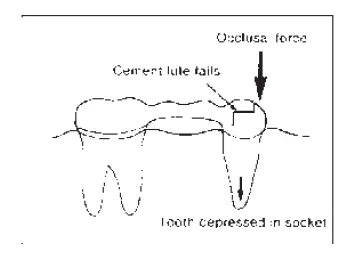
- rigid connector at both ends of the pontic
- abutment teeth are therefore rigidly splinted together
- entire occlusal surface of all abutment teeth to be covered by retainers, otherwise if a force is present that is strong and only on natural tooth, it will provide excess stress to cement which may then fail
Fixed movable
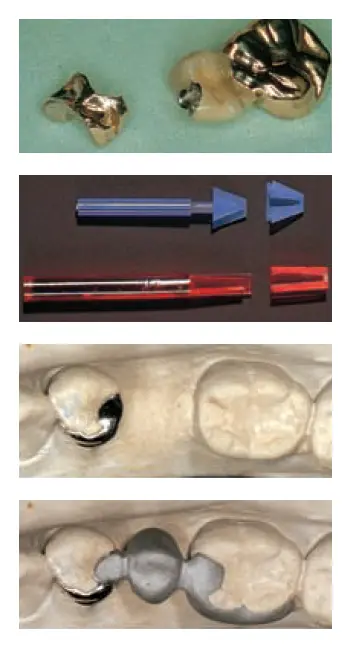
- a rigid connector (usually at the distal) with a moveable connector that allows some vertical movement of mesial abutment tooth
- movable connect should resist both separation of pontic from retainer and lateral movement of the pontic
- posterior teeth commonly tilt mesiall, which tends to unseat distal movemable connectors but is resisted by mesial ones
- moveable connector can be separated before te bridge is cemented, so they can be cemented/inserted separately
- because the joint is moveable, less coverage is needed because we do not worry about flexion of cement luting
Cantilever bridge
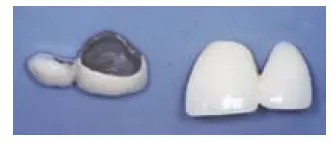
- support for pontic at one end only
- abutment is usually distal
Materials choice
- metal only
- least amount of tooth destruction, cheapest, margins easiest to get
- metal ceramic
- strong and tooth coloured
- ceramic
- tooth coloured, weaker than teeth so more likely to break and save the tooth, rather than the tooth breaking
Minimal prep bridge
- macromechanical
- etched non precious metal surface with the luting cement adhesion, uses two metal wings connected to adjacent teeth for the pontics abutment
- minimal prep means extra surface area/thickness on the tooth, margins produce plaque retention and longevity is quite questionable
- best for short term usage only
Components of bridges
Retainers
- major retainer
- posterior - should not be less than a MOD inlay with full occlusal protection
- incisor - usually complete crown
- minor retainer
- doesnt need full occlusal protection, may be complete or partial crown, or two/three surface inaly
- decision making
- 80-90% will be full crowns
- rest are fair to be partial crowns
Criteria for choosing a suitable retainer
- appearance
- complete crown most likely going to look better than minimum prep retainer
- advantage to make fixpros to be all similar materials for consistency of appearance
- condition of abutment teeth
- remaining tooth surface dictates if crown is necessary or not
- conservation
- taking away 1 or 2 teeth enamel/dentine to "generate" a new tooth entirely, need to balance risks vs benefit
- alignment of abutment teeth and retention
- if there is no common path of insertion, one of the teeth may have to be devitalised to create retention, therefore we have to consider if this is worth it otherwise we will go with another option min prep or not fixed fixed so we don't need parallelism
- occlusion
- abutment teeth may be sound, but needs sufficient space if we are considering minimum preparation retainer, therefore ortho movement (dahl appliance) or tooth prep is indicated
- cost
- minimum prep cheaper than others, but lasts much shorter period of time
Surfaces of a pontic
- ridge surface
- wash through
- no contact with soft tissues
- best for lower molar
- dome/bullet shaped
- occlusal two thirds of buccal show, but not gingival third
- ridge lap and modified ridge lap
- buccal surface can look like a tooth as much as possible until the ridge, then the lingual is cut away for cleaning
- saddle
- complete coverage, causes a lot of inflammation
- wash through
- buccal and lingual surfaces
- smooth and convex
Fixed connectors
- cast
- bridge is cast in a single piece, second soldering operation not required
- stronger, greater surface area, stiff
- soldered/laser welded
- necessary if made of different materials
- porcelain
- for all porcelain bridges
movable connectors
- always designed so that the pontic cannot be depressed by occlusal forces
- concerned about lateral forces as well with longer span bridges, also some distal forces if movable connector on the mesial
- need a tapered dovetailed shaped slot so pin can move up and down a little, but cant move laterally and connector cant separate
Designing and planning bridges
Support
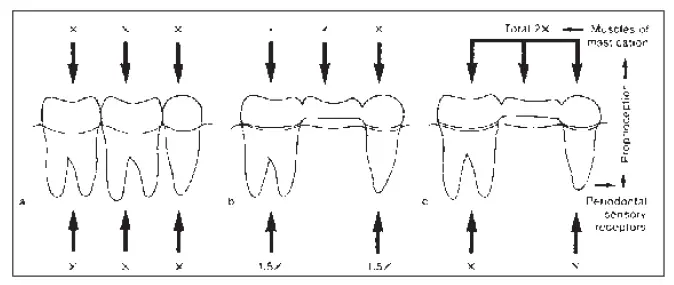
- ante 1926
- each pontic should be supported by the equivalent of an abutment tooth with at least the same root surface area covered by bone
- contemporary evidence suggests this is not entirely true
- provided perio is treated and health is maintained, bridges can be successful by as little as 1/4 the support as suggested by ante
- occlusal loading is modified by the presence of absence of natural teeth and their condition
- 2 canine support is more than enough for anterior bridge, prepping the premolars is pretty unnecessary as canines are very strong
conservation of tooth tissue - just cost vs benefit of healthy tooth vs pontic/s
cleansability - medium term failure is dictated by hygiene, need well designed embrasure spaces
appearance - most important
Planning
- consider the whole patient
- assess abutment teeth
- length of span
- occlusion
- shape of ridge
- best to make rempros? implant?
- need surgical ridge augmentation
general approach to choosing a design
- select eeth
- select retainers
- select pontics and connectors
- plan the occlusion
Clinical techniques for bridge construction
Occlusal adjustment
- more necessary for bridge than for crowns
- new impression taken for opposing jaw if its been adjusted
- additional space for anterior can be produced by dahl appliance
Preparation for temp bridge
- does the patient want a temp bridge or temp crowns on the abutments with a removable prosthesis
- usually just temp crown on abutment is best
- but if its larger case then temp bridge is key
- acrylic temp bridge on study cast
- chairside putty matrix version
Preparations
- minimum prep bridge
- shallow rests made on cingulum or mesial/distal
- or incorporating an already present restoration via MO/MOD prep
- stay in enamel is best
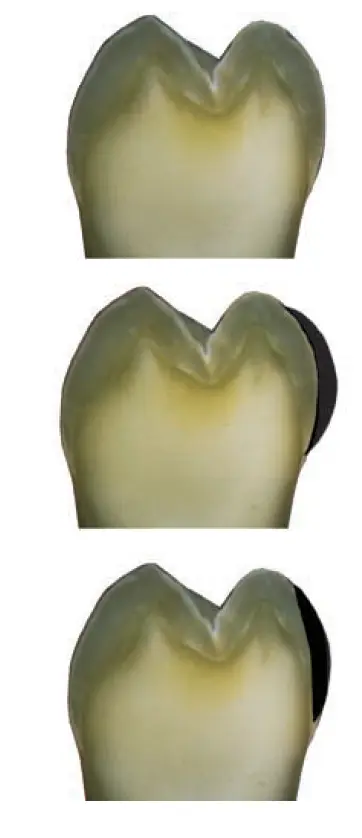
- conventional
- paralleling with normal vision, best to use one eye to avoid parallax removal of undercut/parallelism
- look from further away
- pencil markings
Temp construction
- impression with removable prosthesis in
- or maybe study cast with denture tooth as pontic and impression taken, then pvc vacuum formed slip made
- then adjust the temp denture made from this vacuum slip to take out the flash etc, then cement as per usual
- lab made
- best for provisional or bridge for longer than a week or two
- cant cement it too strong, otherwise it will be very difficult to come off
Next steps
- standard working impression and occlusal records
try in
- best to try in just metal framework first before
- if it doesn't work
- and you've checked all the obvious reasons
- maybe the teeth have moved? (should have used a temp bridge to avoid that)
- split the framework and test each one separately
- retake impression with the satisfactory parts still attached, lab to remake
- dont always have to cement on first go, can use trial cementation with heavy modifier and a non setting zinc oxide powder to allow the patient to get used to their new bridge before adjustments can no longer be made
Localisation
- take multiple impressions of sections of teeth and use different methods to localise them to each other to create an overall impression/pour up
summary steps minimum prep
- first appt
- scale and polish tooth
- tooth prep
- working impression
- lab
- make metal framework and pontic
- 2nd appt
- try in and adjust
- re grit blast fit surface
- repolish enamel
- rubber dam and etch, cement
- remove excess cement
- set
OHI and maintenance
- superfloss, dental floss, tape, interdental brushes
- soft curved toothbrush