MODULE 12
Scanners in orthodontics
intraoral scanners
- eliminate the need for storing study models
- eliminate need for lab
- eliminate risk of model breaking
- reduce expenses in postage
- advantageous in patients who gag
- differences
- cost
- compatibility with software
- size and shape
- cord/cordless
- primescan - 1mil 3d points per second
- trios - 3k 3d points per second
- some wont be acceptaed by third party companies when submitting for lab work/aligners
3d printers and tads
3d printing
- resin filament
- resin - liquid form
- in house aligners, retainers
- study models for surgery
- indirect bonding
TADs
- replacement for headgear
- great source of anchorage
CBCT and custom brackets/wires
CBCT
- 11.4 uSV for ortho low dose cbct
- opg 14-24
- ceph 5-6
- use is only recommended in cases where clinical examination supplemented by conventional radiography cannot supply satisfactory diagnostic information
Custom bracket / wire
- robot made arch wires
Clear aligners
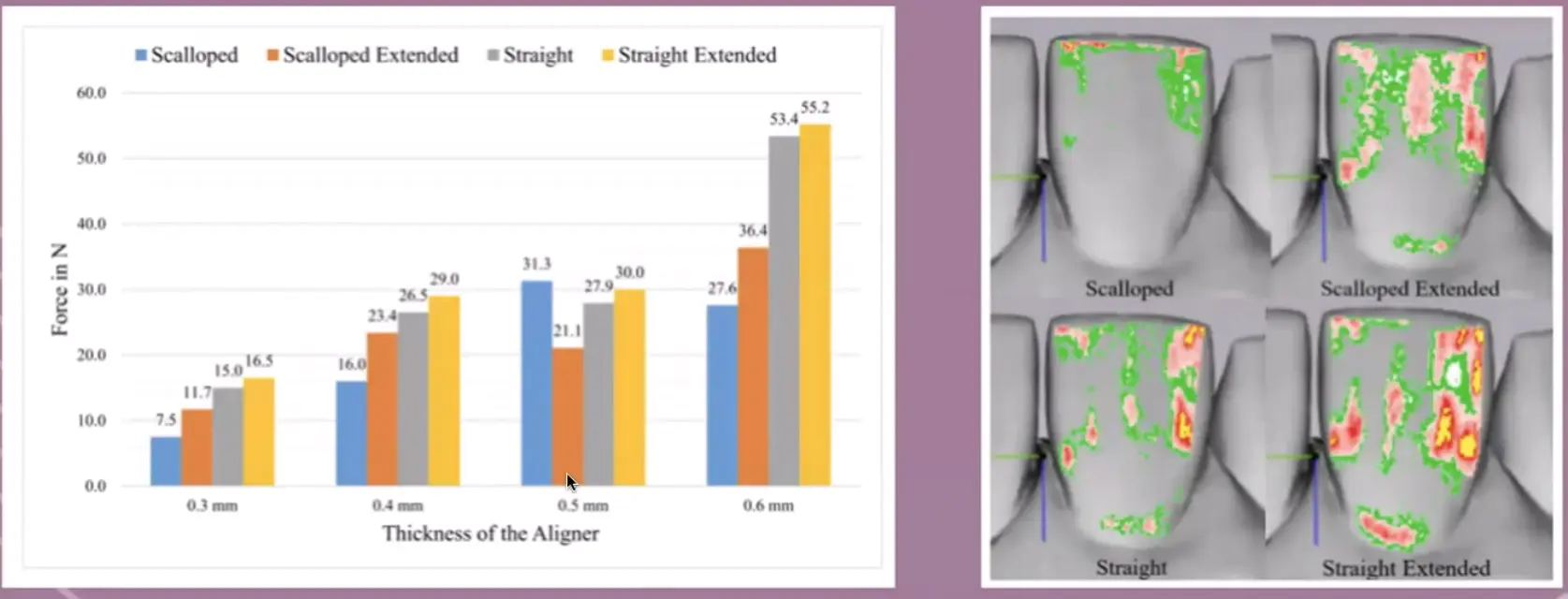
Scalloped vs straight
- encasing gingiva vs non encasing
- scalloped
- greater flexibility at margins
- lower forces in cervical area (less torque)
- more aesthetic
- straight
- greater forces closer to centre of resistance (torque and bodily movement)
- greater force distribution
- increased retention and stiffness
- how do they work
- sequentially move the teeth
- technicians can suggest treatment plans
- how often
- 22h a day
- two week vs 1 week changes
- efficacy
- mean accuracy of Invisalign for all tooth movement is 50% (Haouili 2020)
- anterior teeth were positioned more occlusally than predicted, rotation incomplete, movement of posterior teeth not fully achieved in all dimensions (Grunheid 2017)
- takes longer, takes more effort
- high randomness with many movements
- reality
- average of 3 setups and 2 refinements in aus
- comfortable cases for aligners
- mild crowding
- spaced dentition
- reduced overbite
- uncomfortable
- severe crowding
- deep overbite
- posterior crossbite