Module 4
#DEN4002
#D4/S2/W4
#Periodontology
Periodontal Plastic Surgery
Supracrestal tissue attachment
- circumferential area between crestal bone and CEJ that provides space for junctional epithelium and connective tissue fibres to attach
Why opt for pre resto periodontal therapy
- stable gingival margins for aesthetics
- accurate crown margin placement
- reduce gingival inflammation for better visibility and lack of bleeding during resto
Preprosthetic surgical procedures
- mucogingival procedures
- root coverage
- gingival augmentation
- crown lengthening procedures
- aesthetic
- functional
- ridge preservation procedure
- procedure done immediately following tooth extraction to preserve ridge for future implant, typically done with bone graft and resorbable membrane
- ridge augmentation procedure
- complete on patient with ridge deformity to increase ridge dimensions and allowing placement of dental implant in a prosthetically favourable position
Perio Resto zones
- critical zones of interaction which must be harmonious for logn term trouble free resto
- why sungigval margins?
- adequate resistance and retention form during crown preparation
- significant contour alteration because of caries extent/tooth deficiency
- to mask tooth retention interface within gingiva for aesthetics
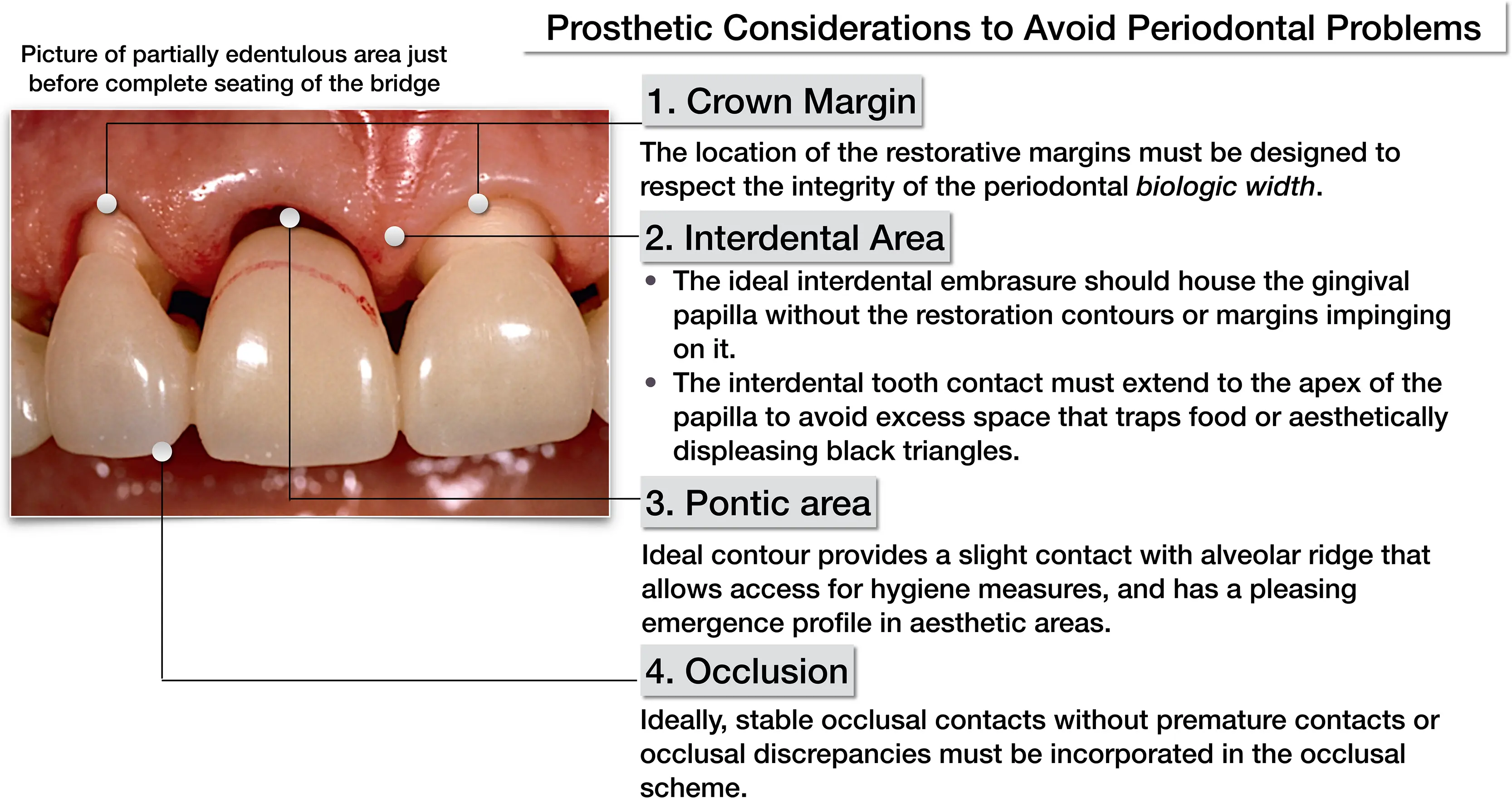
- crown margin
- supragingival - preferential when possible as least perio impact
- equigingival - well tolerated and margins more aesthetic/hidden
- subgingival - greatest biologic risk, especially if violating gingival attachment apparatus
- interdental area
- changes in shape of embrasure can impact height and form of papilla
- if distance between interdental contact and interdental bone crest is less than 6mm (5mm or less), it is possible to rebuild papilla
- restorative - apical position of contact point using material to change shape of teeth
- surgical - perio regen to assist papilla reconstruction
- ortho - uprighting tilted teeth to apically reposition contact point
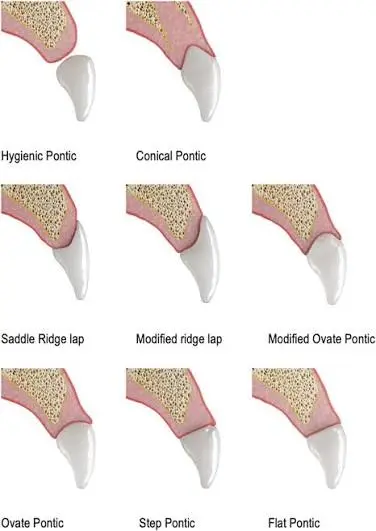
- pontic area
- hygienic (convex)
- ridge lap (concave)
- modified ridge lap (concave)
- ovate (convex)
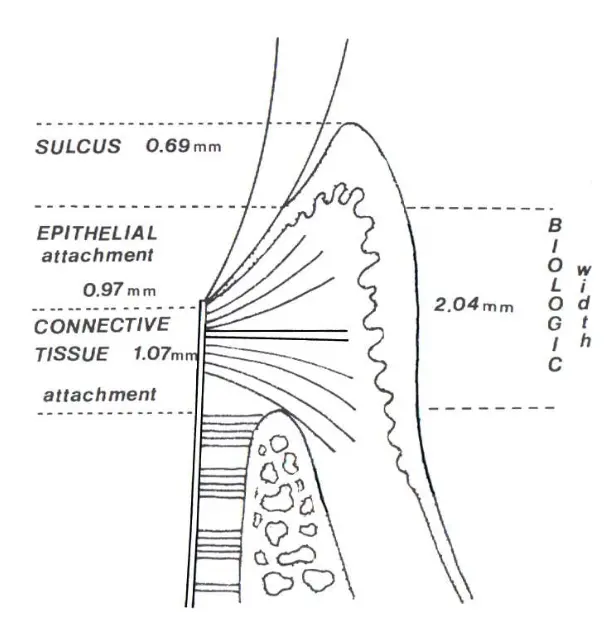
Biologic width
- use existing sulcus depth as landmark
- sungingival margin placement
- PD 1-1.5mm, margin placement 0.5mm below gingival free margin
- PD 1.5-2mm, margin placement up to half of sulcus depth
- PD >2mm, gingivectomy to make PD 1.5 then follow that. This will reduce impression and margin finishing difficulties, avoid increased inflammation and risk of recession
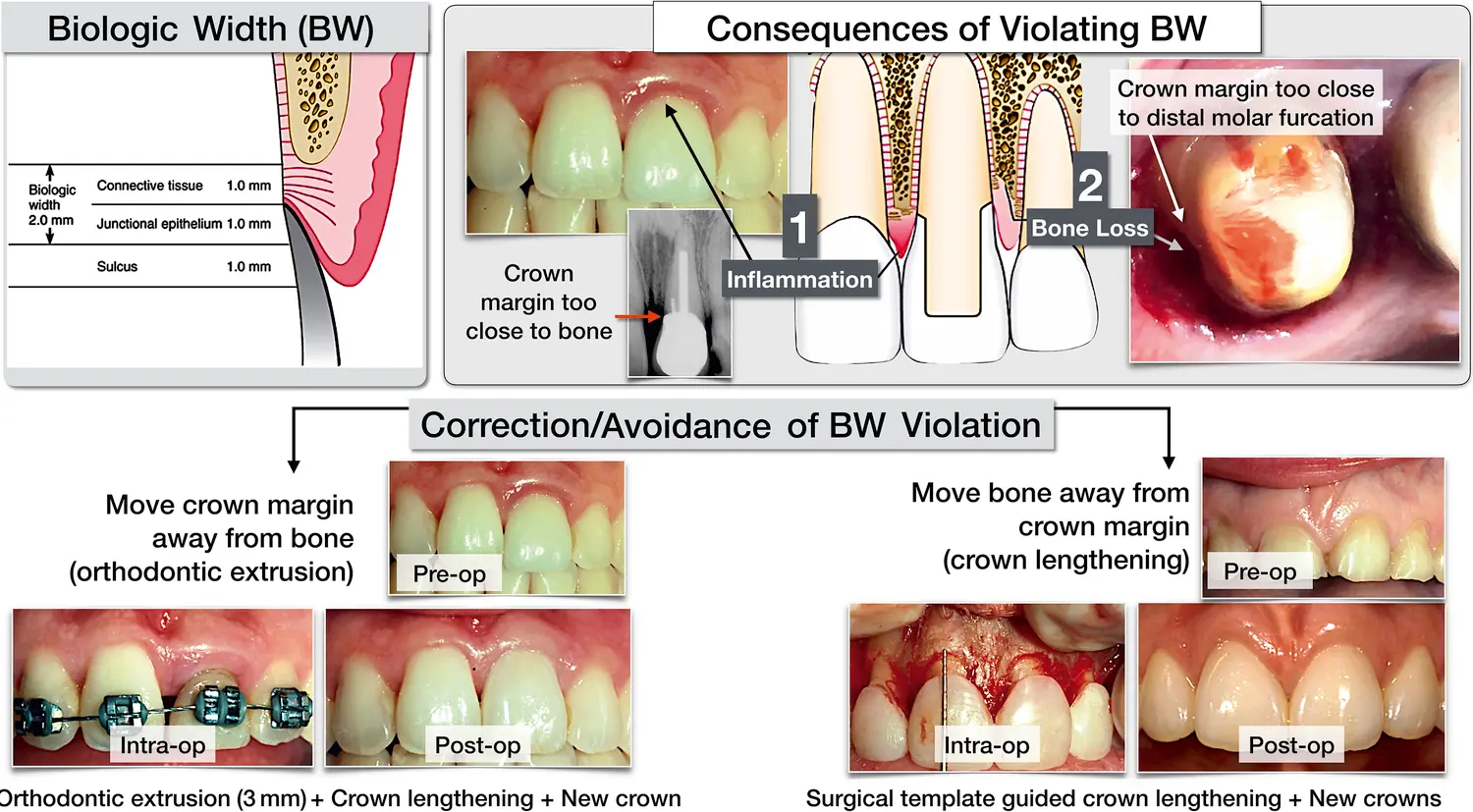
- can be detected via presence of resto margin <2mm from alveolar bone, with inflamed gingiva without other factors evident
- consequences of biologic width violation
- persistent inflammation (usually normal/thick biotype)
- bone loss and gingiva recession (thin biotype)
- violation correction
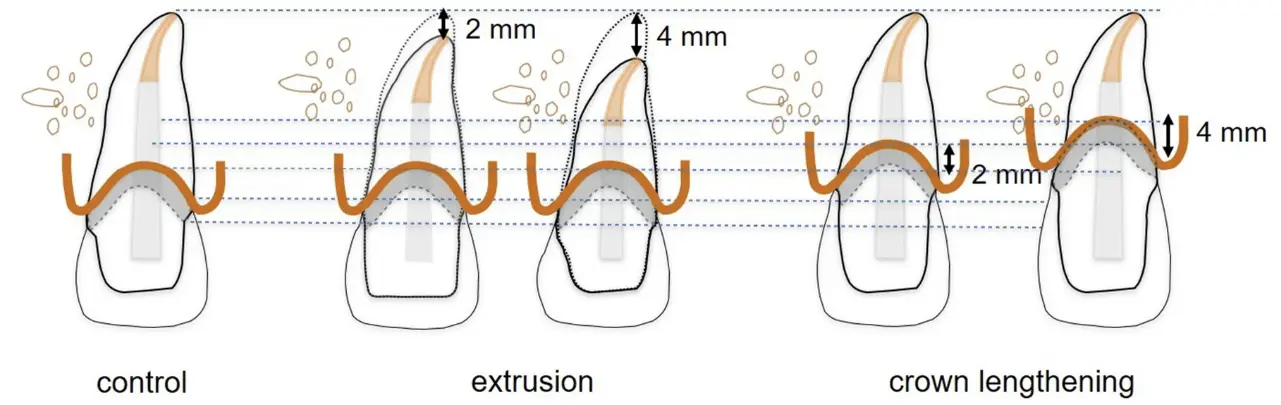
- crown lengthening
- ortho extrusion
Surgical Crown Lengthening
Crown lengthening
- surgical procedure aimed at lengthening crown of tooth, via soft tissue (gingivectomy), hard tissue (ostectomy) or both
- aesthetic crown lengthening
- typical objective to increase crown length in anteriors for ideal proportions
- functional
- typical objective to improve length for new crown or resto to have improved resistance / retention
- indication
- aesthetics
- resto for equiging/subgingv fracture
- resto of equiging/subging caries
- placing subgingival restoration
Aesthetic indicxations
- gingival enlargement
- altered/delayed passive eruption
- DGJ fails to migrate apically to the vicinity of the CJE
- insufficient clinical crown length
- vertical maxilalry excess
- short upper lip
Anterior aesthetics
- smile line
- rest, speech, smile, laugh
- full smile
- lip line, gingival display
- crown lengths
- centrals = canines > laterals
- normal height:width ratio (vertical maxillary excess or is it tooth based?)
- short clinical crowns, incisal edge to CEJ and FGM (incisal wear, delayed/altered passive eruption)
- gingival scallop/zenith
- most apical point at distal of central and canine
- midpoint of lateral
Gargulio et al 1961 Biologic width
Preoperative planning
- remaining tooth structure
- anatomy of tooth
- status of adjacent teeth
- patient wishes
- cost:benefit ratio of procedure and subsequent restoraiton
Clinical evaluation
- soft tissue
- gingival health
- gingival contour
- gingival phenotype
- amount of attached keratinised tissue present
- probing depths
- hard tissue
- location of proposed restorative margin
- occlusion
- mobility of tooth to be crown lengthened
Radiographic evaluation
- location of proposed margin
- level of alveolar crest
- root length (crown:root ratio)
- root form
- root trunk length (location of furcations)
- endo status
- proximity to critical anatomical structures
Aesthetic evaluation
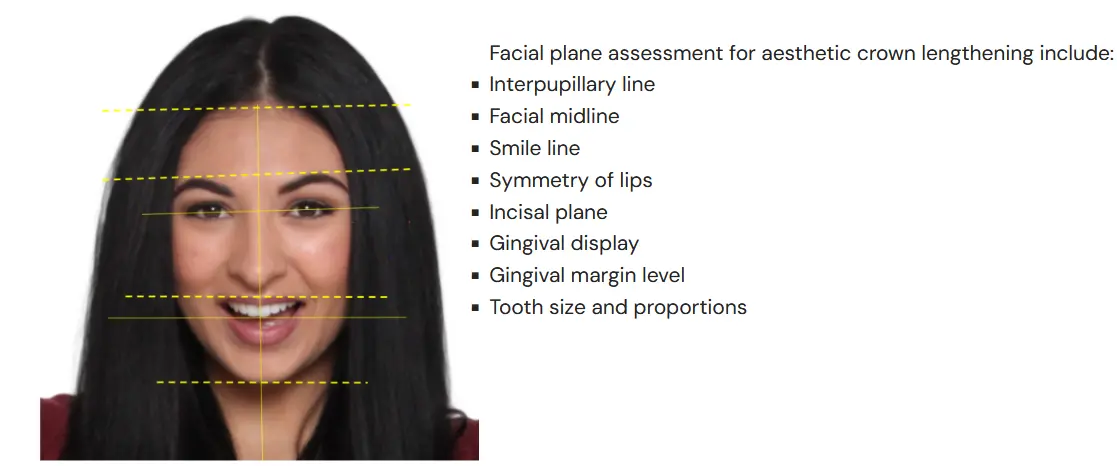
Techniques
- gingivectomy
- alveolar boen crest already ideal, just soft tissue removal
- replaced flap
- ostectomy and gingivectomy, only possible with sufficient keratinised tissue present at site
- extrasulcular incision
- apically repositioned flap
- bone removal with apical relocation of margin without removal of keratinised tissue
- used when there is 2mm of keratinised tissue within site requiring additional crown length
- intrasulcular incision with relieving incision past mucogingival junction
Healing after crown lengthening
- bragger et al 1992
- N-85 cl with ostectomy
- 6mo observation
- gingival margin remained stable in 38%
- changes of +- 1mm in 6mm of cases
- consider
- changes of rebound and biotype
- thick may rebound
- thin may recede
- aesthetic vs non aesthetic areas
- retromolar tissue rebounds quickly (distal of lower 7s)
- rule of thumb
- 6-8 weeks wait in non aesthetic
- 4-6mo in aesthetic areas
Cost of crown lengthening
- tissue removal of tooth and adjacent teeth, which will increase crown to root ratio
- risk of furcation exposure which will decrease long term prognosis of the tooth
Pontic Site Development
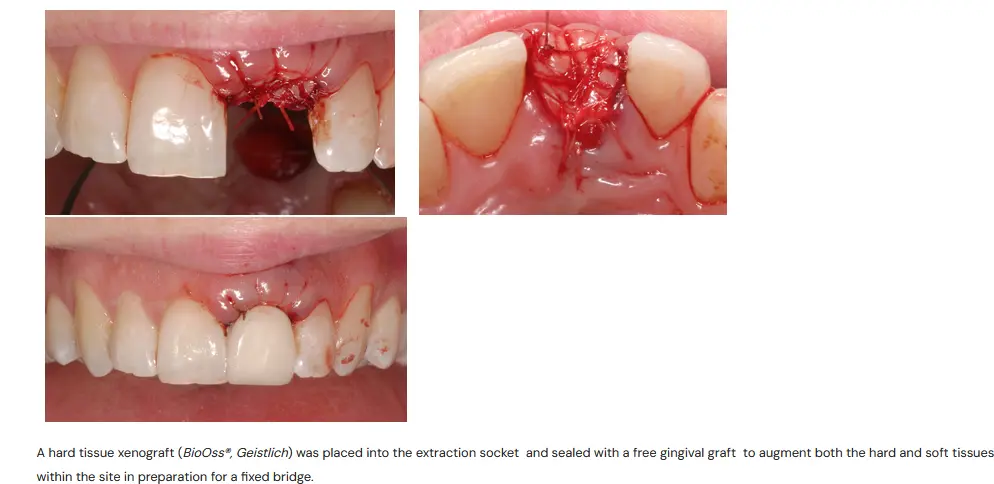
Pontic site development
- ridge deficiency in horizontal or vertical dimension
- might impact aesthetic in high smile line
- hard or soft tissue grafting to plump out space
- provide harmonious buccal contour
- materials must remain stable
Soft tissue Grafts for Recession Defects
Is keratinised tissue necessary for health
- yes - lang and loe 1972
- sites 2mm or more of KT clinically healthy
- sites <2mm clinical inflammation
- no - Miyasato et al 1977, Wennstrom and Lindhe 1983, Dorfman et al 1980, Kennedy et al 1985, Wennstrom 1987b
- no difference in inflammation or recession
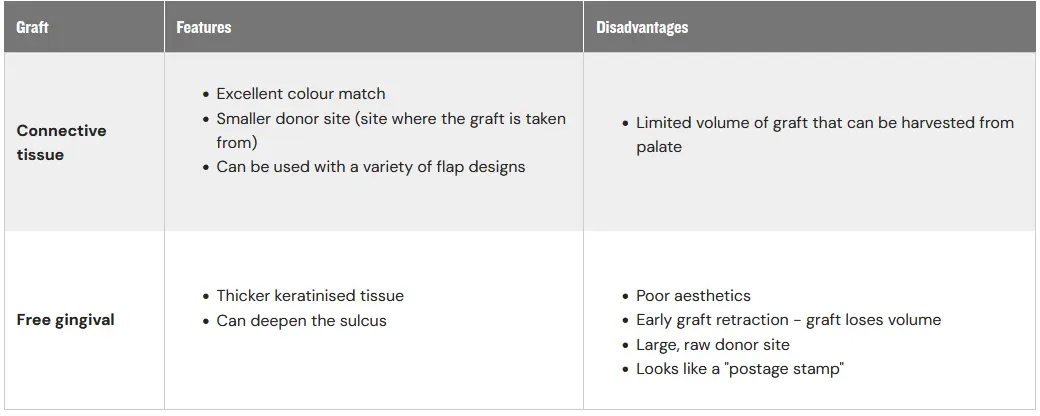
Properties of Autogenous soft tissue grafts