Root canal mechanical instrumentation 2, rotary canal preparation methods
#D3/S2/W3
#Endo
Canal preparation
- shape of instrumentation provides vehicle for irrigation, medication and obturation
- unshaped canal cannot be cleaned or filled
- files shape and irrigants clean (chemo + mechanical debridement)
Why tapering canal preparation?
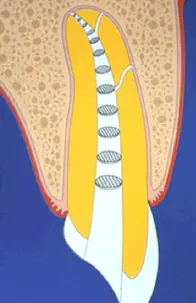
- removal of microorganisms and pulp tissue
- allow penetration of irrigants and medicaments
- allow compaction of high quality root filling
- reduce impact on root strength
Technical goals
- tapering funnel from access cavity to apical foramen
- maintain path or original canal and avoid iatrogenic damage
- create sufficient space for irrigation and medication
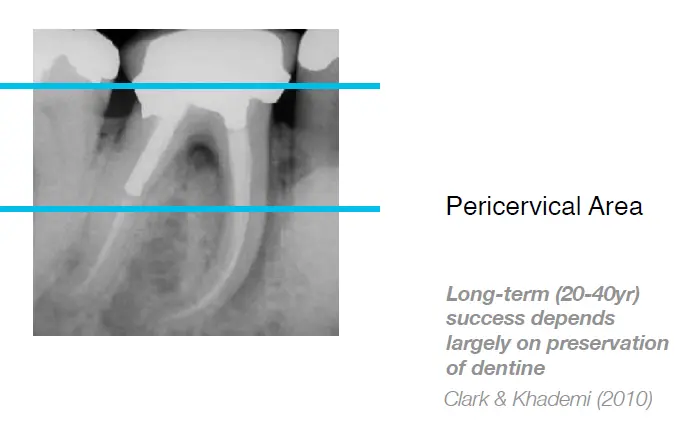
- strategiccally conserve dentine to facilitate long-term tooth function
- apical foramen kept as small as practical
Traditional techniques
- traditional stainless stell techniques can result in excessive coronal dentine removal
- predispose to tooth fracture
- gates-glidden use for coronal flaring lead to increase in subcrestal fractures
Canal transportation (technical inadequacy with stainless steel)
- stiff instruments straighten during canal prep
- overprepartion of outer wall (apical third) and inner wall (middle/coronal third)
- transported canal has hourglass shape
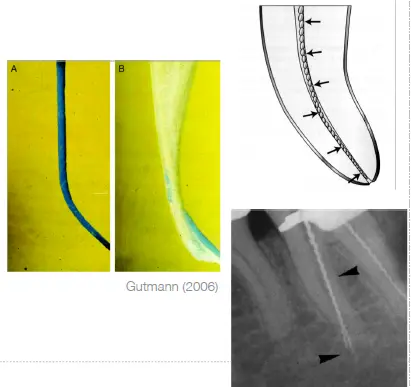
- associated complications
- compromised cleaning
- obturation with poor apical density/seal
- perforation (apical or strip)
- ledging
- excessive removal or radicular dentine predisposes to root fracture
Nickel titanium files
- extremely flexible alloy
- permits manufacture of rotary instruments with greater taper
- conservative coronal flaring
- smoothly tapered canal shape
- permits enlargement to greater apical sizes with no/minimal apical transportation
- predictable shape facilitates obturation
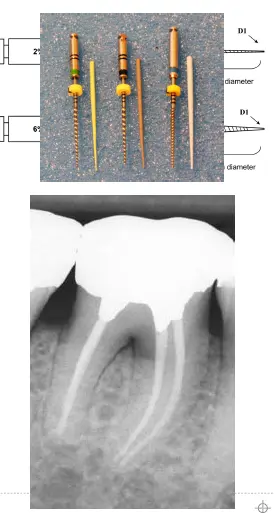
- Size and Taper
- Better clinical outcomes with rotary NiTi
- significantly higher healing rate and lower incidence of procedure errors (cheung and liu 2009)
- good quality root filling rate significantly increase (Molander et al 2007)
- requires fewer instrumentation sessions (Koch et al 2012)
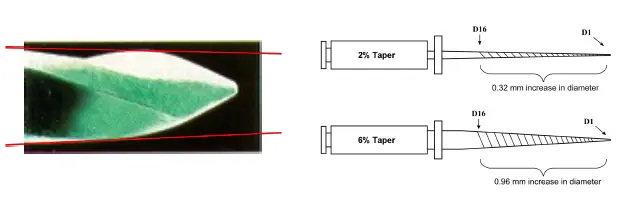
Problems
- too expensive
- endo files shall be single use unless cleaned by validated cleaning process
- validated protocol using mechnical, chemical and ultrasonic cleaning
- fracture more often?
- study indicate about the same
- hand 1.6%, rotary 1.0%
Aetiology of NITi instrument fracture
- torsional fracture
- tip binds while shaft continues to rotate
- deformation precedes fracture
- due to excessive apical pressure / inadequate glide path
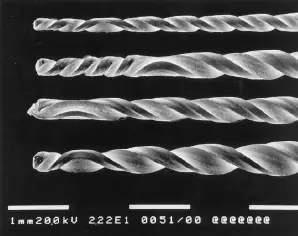
- flexural fracture
- cyclic fatigue occurs when file rotates in a curved canal
- work hardening and metal fatigue leads to initiation surface cracks
- file breaks suddenly without distortion
- due to substantial file usage
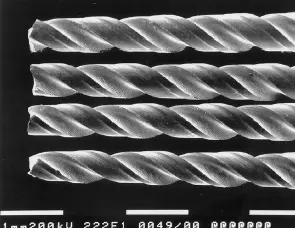
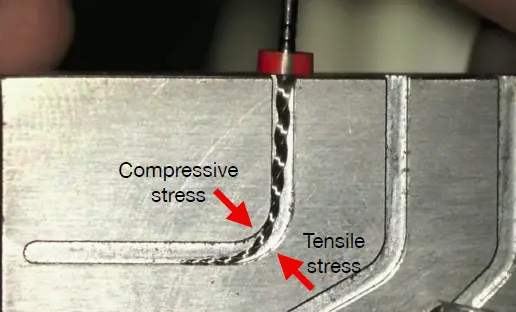
- Canal curvature
- small radius of curvature reduces rotary NiTi lifespan
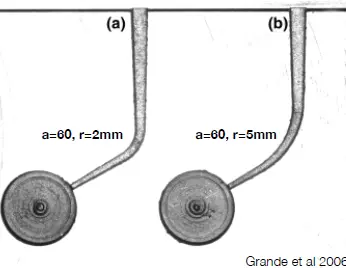
- number of uses
- no correlation between number of uses and frequency of fracture
- single overloading event is most common fracture mechanism
- abrupt canal curvature
- clogging of flutes
- excessive apical force
- operator experience
- reuse up to 4 times does not increase fracture incidence (walcott 2006)
- up to 10 times or 5 molar teeth (plotino 2007)
- extensive precycling (up to 75% mean fatigue life) will significantly reduce the torsional resistance of NiTi files
- to not fracture
- light touch only
- ensure file always moving in canal
- pulp chamber flooded with sodium hypochlorite
- replace files sooner after use in narrow or curved canals
- examine files regularly during use
- caution when
- acess through crowns
- sharp canal curvature, joining canals
- isthmus region between two canals
- patient factors - closing mouth, jerky movement, falling asleep
Effectiveness of chemomechanical preparation
- mechanical instrumentation reduced bacteria 100-1000 fold but no canals were bacteria free
- instrumentation with Na OCl reduced bacterial number by >99%, with 50% canals culture negative
- inter appointment dress (CH) further reduced bacterial numbers, 75% canals culture negative
- increased apical enlargement reduced bacterial numbers further
Research show
- morphology studies
- apical canal is wider than 300-350 microns
- therefore minimum apical preparation of ISO30-35 of larger
- microbiological studies
- more bacteria removed as apical size increases
- histological studies
- cleaner apical preparations as apical size increases
- clinical outcome studies
- SS files to prepare to larger sizes decreased success
- NiTi increased healing rate with larger apical sizes
- NiTi higher healing rate with 3 sizes larger than first 2 bind
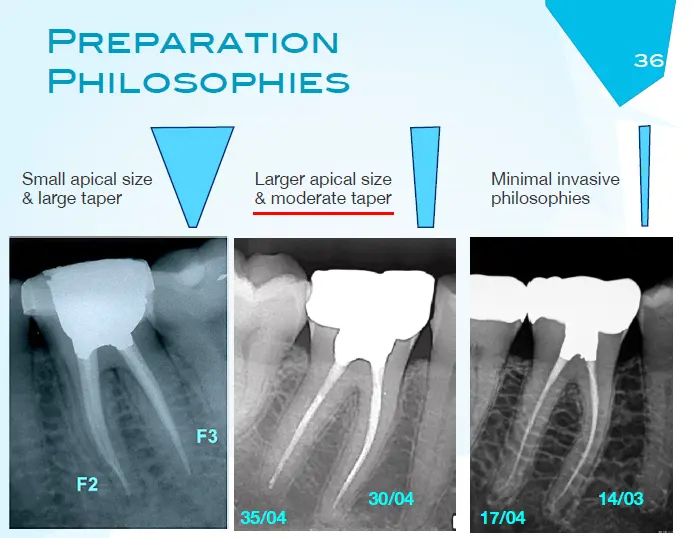
Larger apical sizes + moderate taper
- irrigant penetration
Best NiTi system
- any system or combination that produces moderate taper (~4%) and includes files with tip sizes #30 - 35 and larger
- then consider secondary factors such as cross sectional shape and manufacturing process (affect flexibility and fatigue life)
Instrumentation Protocols
Glide path/root canal freeway
- essential prior to rotary NiTi instrumentation to prevent canal blockages, ledges, transportation
- small stainless steel hand files
- minimum size #15 / .02 SS hand file to patency
Patency instrument - small stainless steel hand file (#10 or #15)
- penetrates up to 1mm beyond working length
- maintains a clear canal
- clears infected debris at apical foramen
- improves delivery of irrigants into apical third
- no effect on post op pain
Glide path (small SS hand files) - initial negotiation #6, 8 10 15 hand files
- precurve file
- watch winding motion
- short amplitude in out strokes
- flooded canal
- use a #10 / 02 hand instrument between every second rotary instrument (recapitulation and maintain patency)
- recapitulation prevents buildup of dentinal debris
- establish working length (apex locator + radiograph)
- rework #15 / .02 SS hand file to working length
- push pull filing of all walls (circumferential filing)
- file until loose
Preliminary coronal flare (preflaring)
- required if #10 or 15 does not slide to working length
- eliminates coronal and middle third interferences
- more accurate apical sizing
- orifice opener (mtwo 25/06 to 2/3 working length)
- gentle brushing action
Conventional rotation NiTi instrumentation - touch retract action (keep moving) in a flooded canal
- 0.5-2mm increments, deeper with each increment
- reduce fracture incidence
- do not keep file stationary in one spot
- clean flutes, copious irrigation
- recapitulate with #10 hand file to maintain glide path
- 2-3 passes once at length
- no more than 1/2 rotations at the apex with any pass to prevent apical transportation
**Mtwo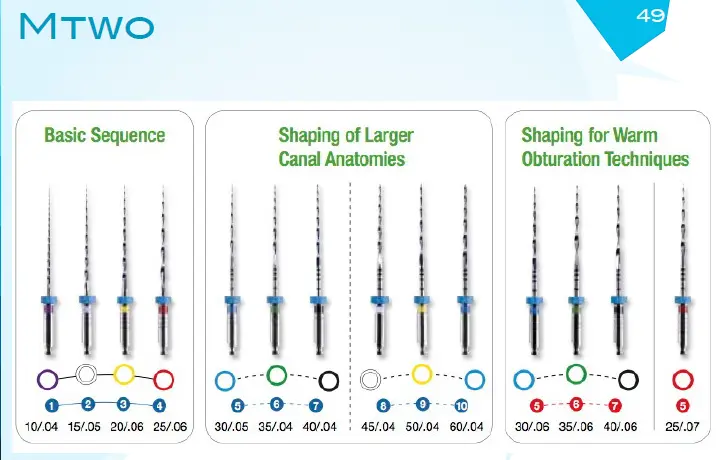
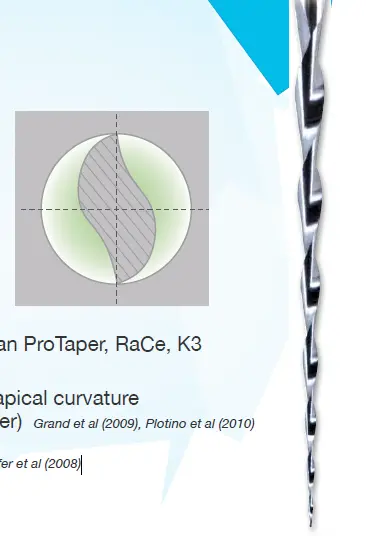
- **S shaped cross section
- Reduced core diameter
- Increased flexibility
- Maintains curvature better than ProTaper, RaCe, K3
- Greater fatigue life in abrupt apical curvature
- Superior cutting efficiency
- 11mm shaft length
- 16mm vs 21mm working part
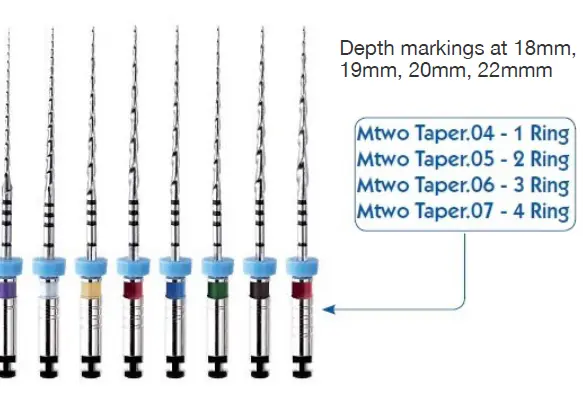
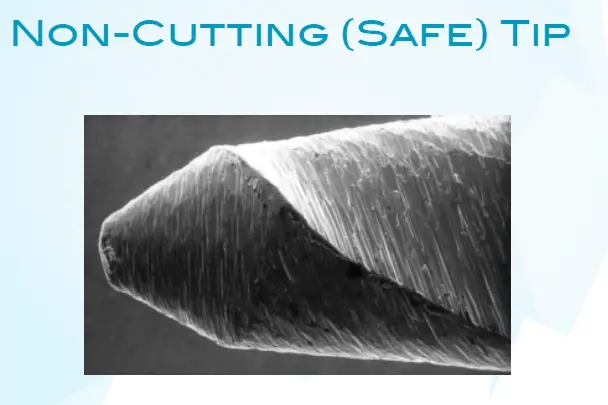
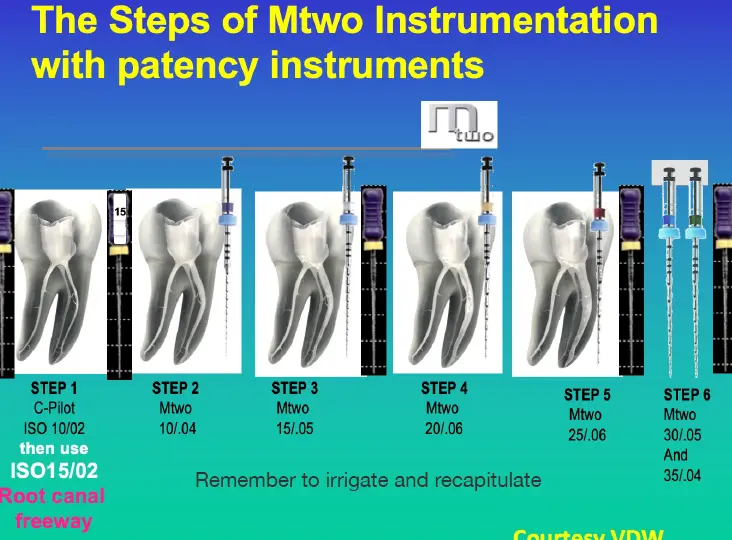
Master apical file (MAF)
- largest instrument used at the working length
- may be used to determine master GP point size
- apical enlargement size considers removal of debris on root canal wall and allowing irrigants to penetrate the apex
If canal is open to greater than #40
- when canal is open to 35, irrigate can peentrate apically
- further enlargement of the cnaal is unnecessary
- circumferential filing to disrupt biofilm as much as possible
- irrigant activation
- may need to modify obturation technique
Instruments
Ideal properties
- maximum flexibility
- minimise/eliminate canal transportation
- maximum torsional resistance
- maximum fatigue resistance
Niti shape memory alloy
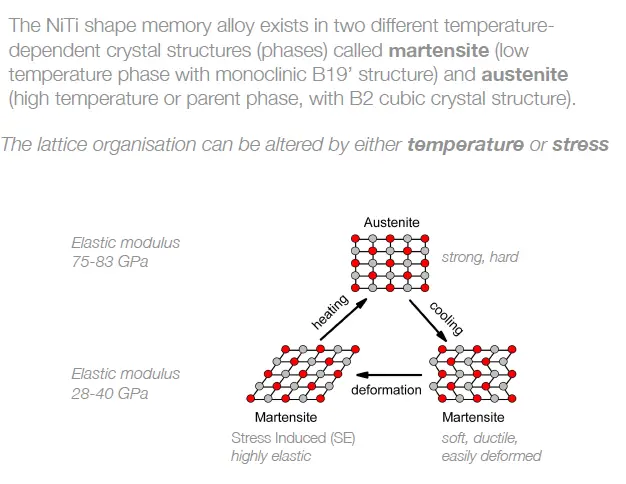
- conventional NiTi are in austensile phase during clinical use (exert a restoring force)
- when cooled with irrigant, transforms to martensite (elastic and deformable) (doesnt exert a restoring force)
- conventional NiTi
- preferential cutting on apical outer wall, middle third inner wall
- zipping, elbow formation, apical transportation
- Heat treated NiTi
- file contains higher proportion of martensite at room and body temperature (no restoring force), no shape memory and therefore no zipping or preferential cutting
Thermomechanical manufacturing of NiTi instrument
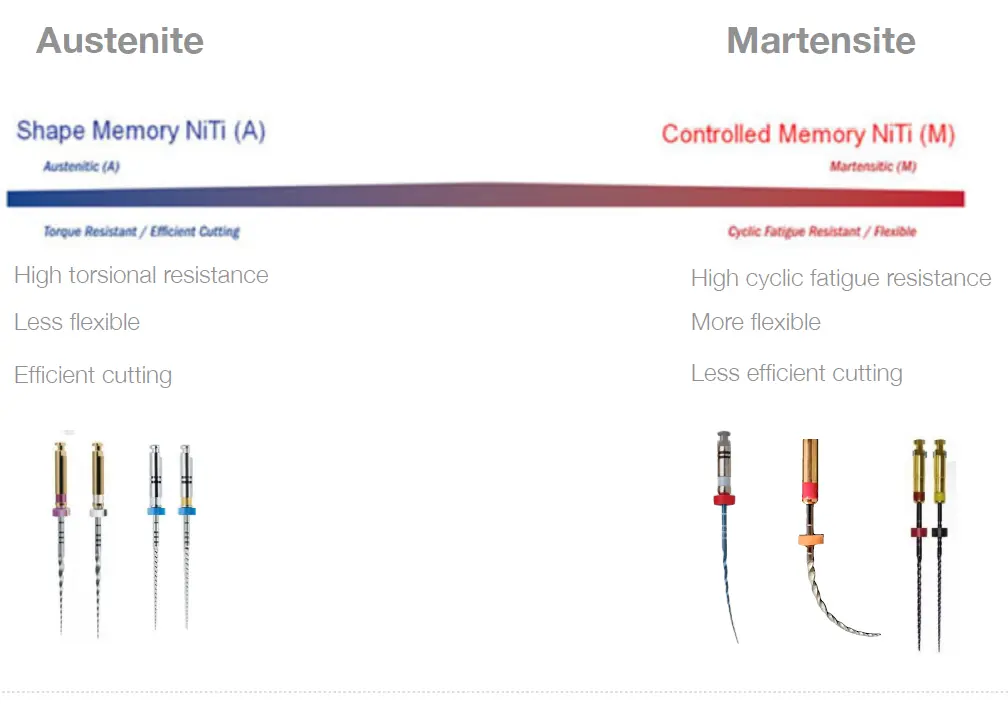
- higher martensite content alloys
- edgefile x7, HyFlex
- mainly in martensite phase during clinical use
- extremely flexible
- improved transportation dynamics
- improved fatigue resistance
- resistance to torsional fracture was reduce (softer)
- glide path is therefore more important (dont push if file doesn't want to advance)
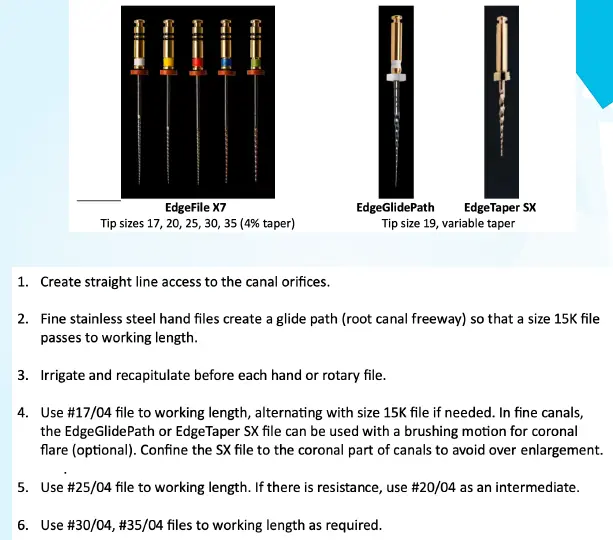
Edgefile X7
- heat treated alloy
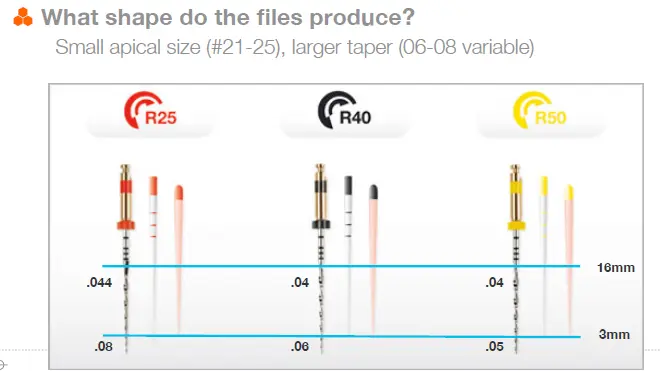
- fixed taper instrumens .04
- maximum flute diameter 1mm
- operate at 300-500rpm, torque 2.5-4 Ncm
- smallest file 17/04
Single file systems - reciprocation
- reciprocating files cut in a counter clockwise direction
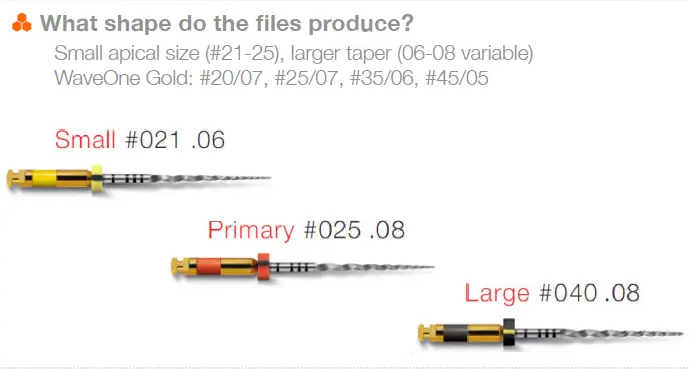
- reciproc F 30 deg R 150 deg
- Waveone F 50 deg R 170 deg
- potential reduction in fracture risk due to reduced torsional stress and increased cyclic fatigue resistance
- time saving and fewer files